10-Day Italy
10 cities |
39 attraction(s) |
total distance 1580
km
 TIPS
TIPS
Day1
Day2
Day3
Day4
Day5
Day6
Day7
Day8
Day9
Day10
Day1: Rome
7 attraction(s) ·
4 km
1
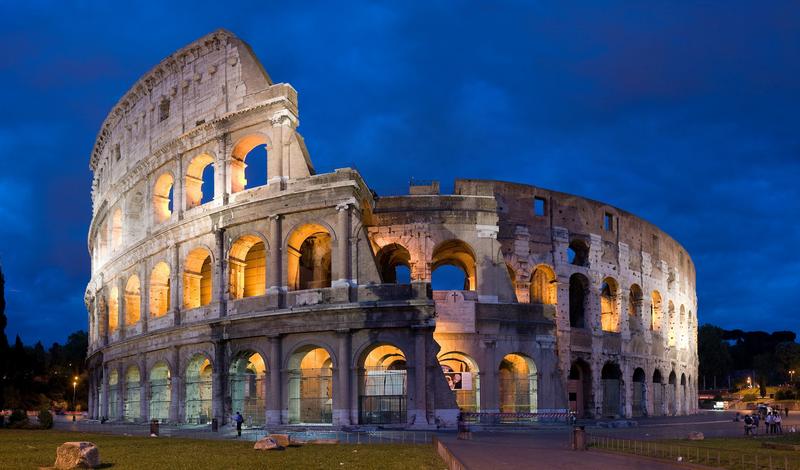
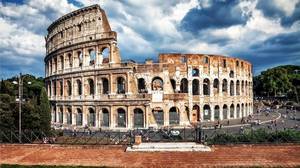
The Colosseum is one of the most famous buildings of ancient Rome and the largest circular amphitheater of the empire. Built between 72 AD and 82 AD on the site of Nero's Golden House, it could accommodate up to 50,000 people. The Colosseum was commissioned by Emperor Vespasian and completed under his son Titus, with later renovations by Domitian. It served as a venue for animal hunts and gladiator games until 523 AD. According to Cassius Dio, the opening ceremonies lasted 100 days and 11,000 animals were killed. Earthquakes in 442 AD and 508 AD caused severe damage to the structure, and it was further destroyed during the Middle Ages and used as a fortress. In the 15th century, the Vatican began protecting the Colosseum as a holy site due to early Christian martyrs who were said to have been killed there. The design of the Colosseum was based on Greek theaters, but with the addition of arches, spectators' seats were built on top to form a circular amphitheater. There were also canopies suspended by cables to shade spectators and aid ventilation. Under the arena were various tunnels and chambers for storing props, animals, and gladiators, which could be lifted onto the stage during performances. The Colosseum even had a water channel to create a lake for naval battles.
1
km
2
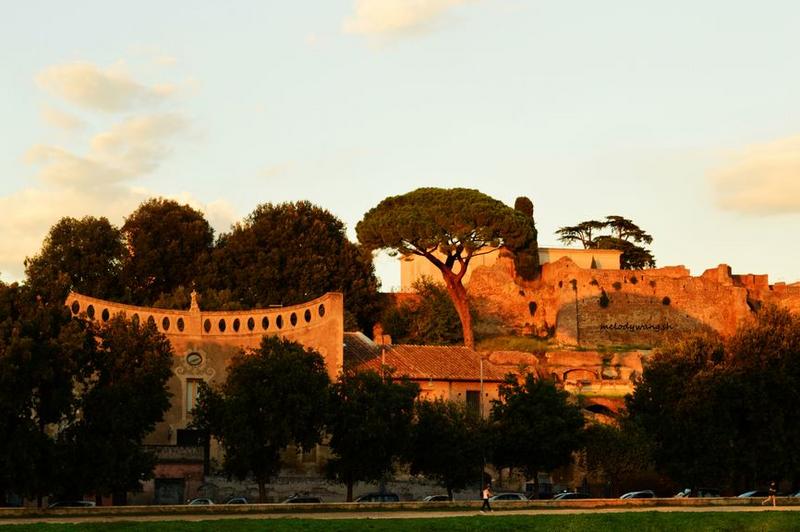
The Ancient Roman ruins, also known as the Ancient Roman Square, Ancient Roman Market, or Ancient Roman Ruins, are located between the Palatine Hill and the Capitoline Hill in Rome, Italy. They form the center of the Ancient Roman city, including many old and important buildings. Caesar spent a huge sum of money to build a square, which was completed and put into use in 46 BC, but it was not until the Augustan period that it was completed. The Temple of Mars Ultor is one of the tallest buildings standing in the Subla Plebeian district. Augustus added a memorial square, which became a right angle with Caesar's square and was officially put into use in 2 BC. Tiberius decided to connect all the squares in the area, and after his death, his successor Nero named it the Nero Square or Transform Square. The building complex in the square includes the Triumphal Arch of Titus, the Temples of Antoninus and Faustina, the Senate, the Sacred Road, and the Hall of Marcus Aurelius and Constantine, making it an important cultural heritage of Rome.
1
km
3
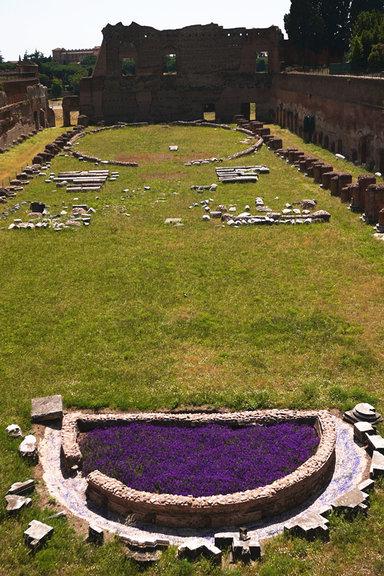
Palatine Hill is the birthplace of Rome, inhabited by people around 1000 BC. It is located in the center of Rome's seven hills and is one of the oldest preserved areas in modern Rome. Palatine Hill is situated on higher ground, overlooking the ancient Roman Forum on one side and a large arena on the other. Nobles vied to build houses here and successive Roman emperors constructed luxurious palaces. However, Palatine Hill gradually fell into neglect after Rome's decline. Today, the hill is mostly dominated by the remains of Domitian's palace. This palace had a complex structure and covered a vast area. It was used as the primary imperial palace for 300 years.
1
km
4
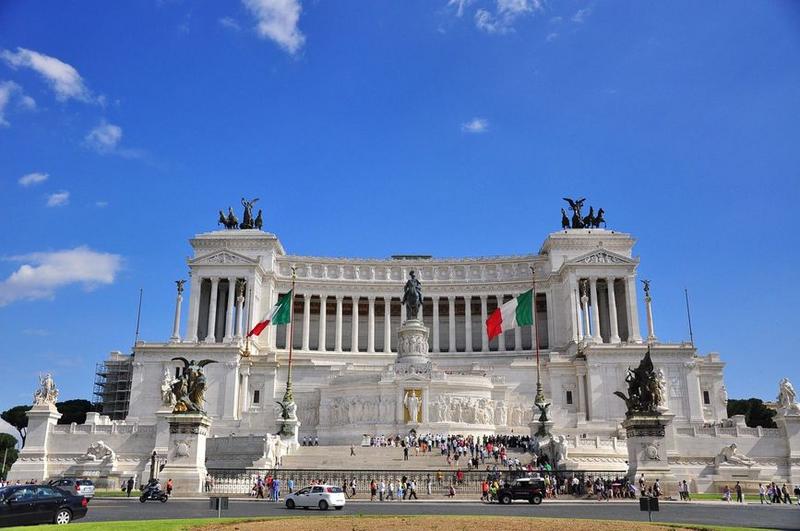
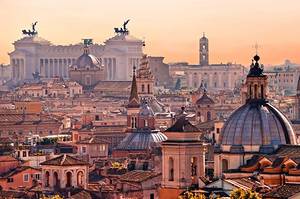
The Venice Square, located in the center of Rome, is a circular square with neoclassical architecture as its front. The building, which took 25 years to complete, was built to celebrate the unification of Italy in 1870. The most distinctive part is the arc-shaped facade formed by 16 columns, and under the steps are two groups of fountains symbolizing the Tyrrhenian Sea and the Adriatic Sea. The central equestrian statue is of Victor Emmanuel II, who completed the unification of Italy. There are two huge bronze statues above the building, representing "The Victories of Patriotism" and "The Victories of Labour". Two soldiers always guard the Tomb of the Unknown Soldier.
The Teatro Marcello street on the right of the monument leads to the church of Santa Maria in Cosmedin. The church is considered one of the oldest Christian places of worship in Italy. It is decorated with Corinthian columns and Byzantine-style mosaics, and has the famous "Mouth of Truth" - a ancient Roman manhole cover, as well as the ruins of the oldest temple in Rome, the Temple of Portunus. It is one of the favorite tourist attractions.
On the left side of the square is the Doge's Palace, a Gothic building from the Renaissance period. During the heyday of the Venetian Republic, it was the location of the Venetian embassy. Mussolini gave his famous "balcony speech" here. Today, the Doge's Palace has become a museum, showcasing many works of art from the Italian Renaissance period.
1
km
5

Grand marble neoclassical temple honoring Italy's first king & First World War soldiers.
1
km
6
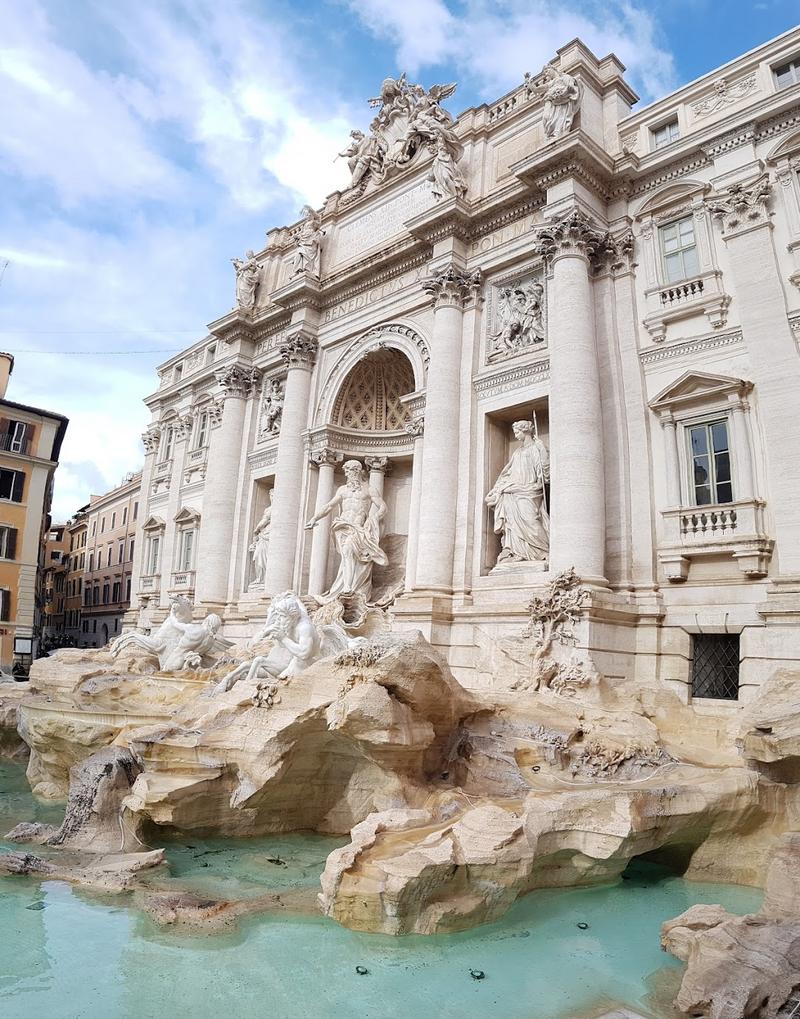
Aqueduct-fed rococo fountain, designed by Nicola Salvi & completed in 1762, with sculpted figures.
1
km
7
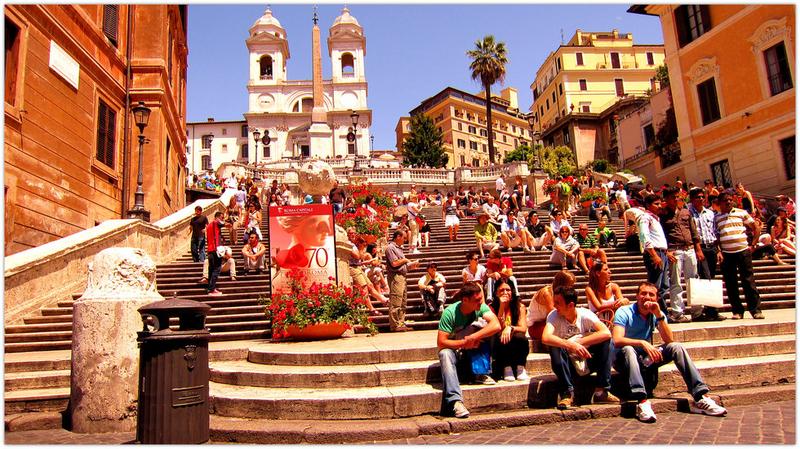
The Spanish Steps do not have many unique features, it only became a world-renowned tourist spot because Audrey Hepburn ate ice cream on the steps in "Roman Holiday". However, starting from the Condotti Street across the steps, you will find all the top brands and flagship stores you know here. Even the first store of Bvlgari jewelry opened nearby. In addition, the broken boat fountain under the Spanish Steps is designed by Pietro Bernini, and has a very special shape. If you feel tired, you can go to Caffe Greco nearby for a cup of coffee, which is one of the oldest cafes in Rome and attracts many visitors.
Day2: Rome
2 attraction(s) ·
1 km
1
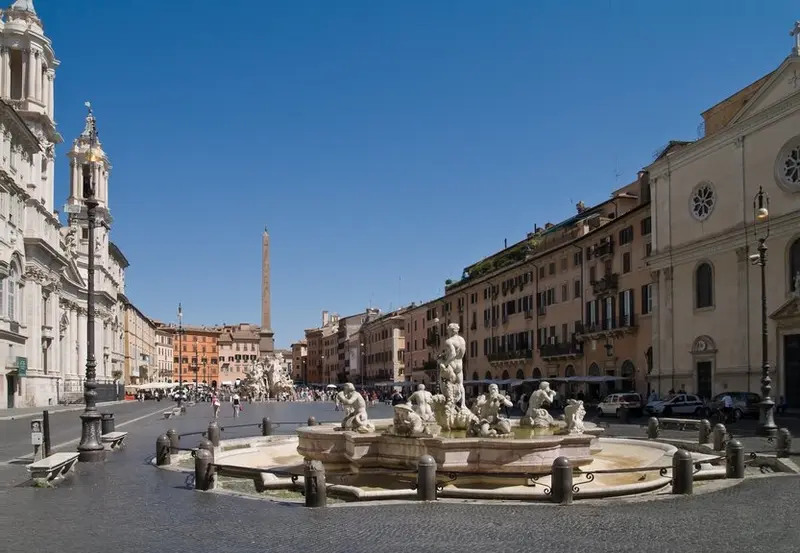
Piazza Navona is an open square with three famous fountains: the Fountain of Neptune, the Four Rivers Fountain, and the Moor Fountain, all created by master artists. Although not very large, the square is bustling with street artists and acrobats. The surrounding buildings are considered the most beautiful Baroque architecture in Rome.
1
km
2
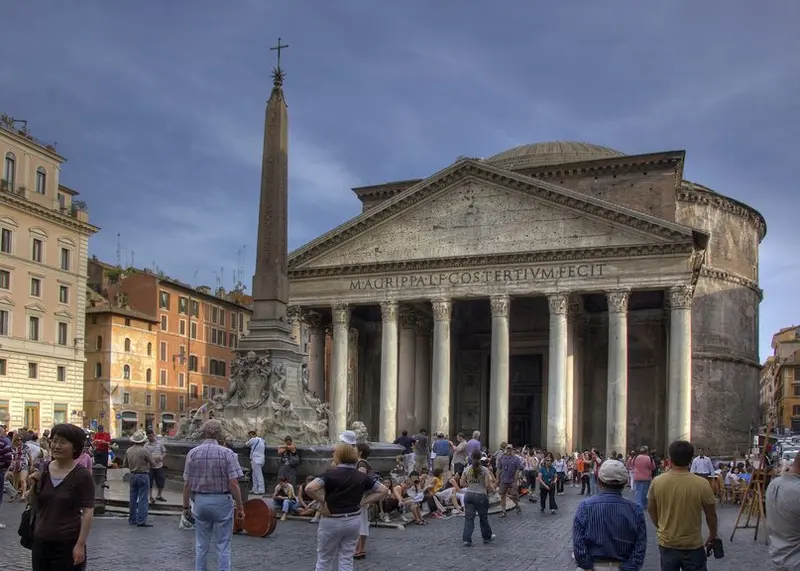
The Pantheon, located in Rome, is a religious building from ancient Roman times which was later converted into a church known as the Church of Santa Maria ad Martyres. The Pantheon was initially built in 27 BC to commemorate the victory of Octavian over Antony and Cleopatra. However, the original temple was destroyed by fire in 80 AD and was not rebuilt until 125 AD. Inscriptions on the colonnade wrongly attributed the building to the assistant of Octavian, Agrippa, until it was discovered in 1892 that the entire structure was built by Roman Emperor Hadrian. During the Renaissance, the Pantheon became a study point for Italian architects and had a significant influence on western architectural history. The building's structure is simple and circular, topped with a 43.3-meter diameter dome, which was the largest in the world until 1436. The interior of the dome has five tiers of recesses, giving a sense of upward movement. The colonnade of the building is made up of 16 granite columns, each 12.5 meters tall with a base diameter of 1.43 meters. The entire structure of the Pantheon was constructed using poured concrete, with the dome gradually thinning out to reduce the weight. The concrete used by the ancient Romans was a mix of natural volcanic ash from near Naples and various aggregates. The Pantheon is a testament to ancient Roman architecture and has influenced the design of many public buildings. It has also been a burial site for important figures since the Renaissance, including artists Raphael and Annibale Carracci.
Day3: Florence
4 attraction(s) ·
1 km
1
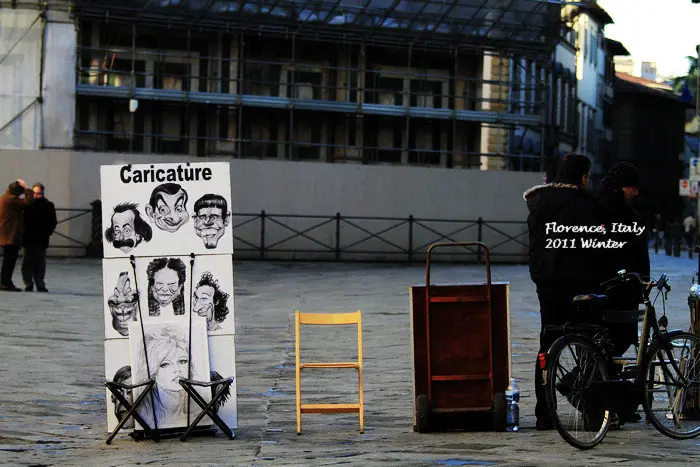
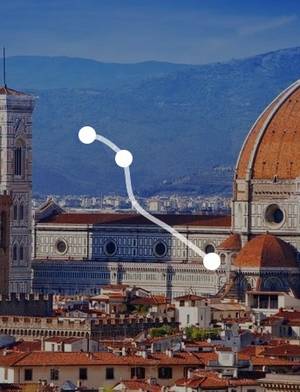
The Cathedral Square (Piazza del Duomo) in the center of Florence is known for its iconic buildings, including the Cathedral of Santa Maria del Fiore, the Baptistery of St. John and Giotto's Bell Tower. It is a must-visit for travelers and offers a vibrant atmosphere where you can feel the cultural heritage of Florence. The square is bustling with people and is one of the few tourist destinations in Florence.
1
km
2

The city's heart, a square dominated by the 14th-century crenellated tower of the Palazzo Vecchio.
1
km
3
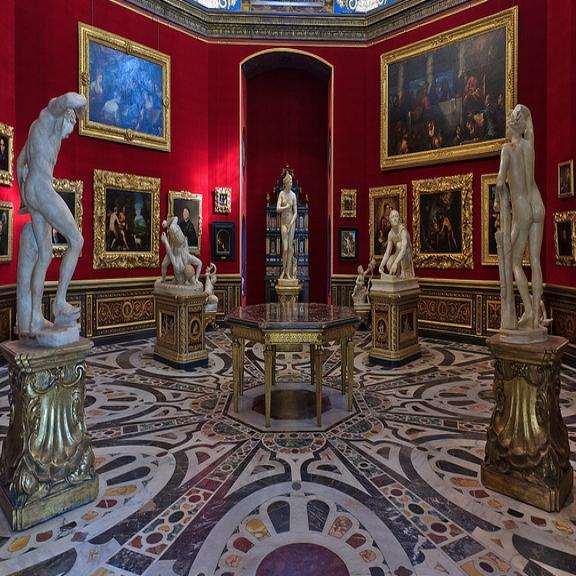
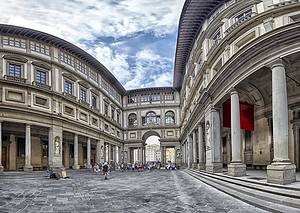
One of Italy's most important art museums, the Uffizi Gallery is also one of the most important art museums in Europe. It displays the richest and most precious treasures left by the Medici family, who funded Renaissance artists such as Leonardo da Vinci, Michelangelo, and Donatello, hence the rich collection of their artworks. The museum has over 100,000 exhibits divided into 46 halls, each of which is worth visiting. However, if time is limited, it is best to visit a few key exhibition halls. The most famous exhibits at the Uffizi Gallery include Botticelli's "Primavera" and "The Birth of Venus," Leonardo da Vinci's "The Adoration of the Magi," as well as Michelangelo's "The Holy Family" and Titian's "Venus of Urbino." The name "Uffizi" means "offices" in Italian, and this was once the Medici family's office. Later, the family descendants donated all their collections to the government, making it a public art museum. Today, the museum mainly displays paintings, while other sculptures are housed in the Bargello Museum. If travelling during peak season (May to September), it is best to book online in advance and arrive early, otherwise the queues will be very long.
1
km
4
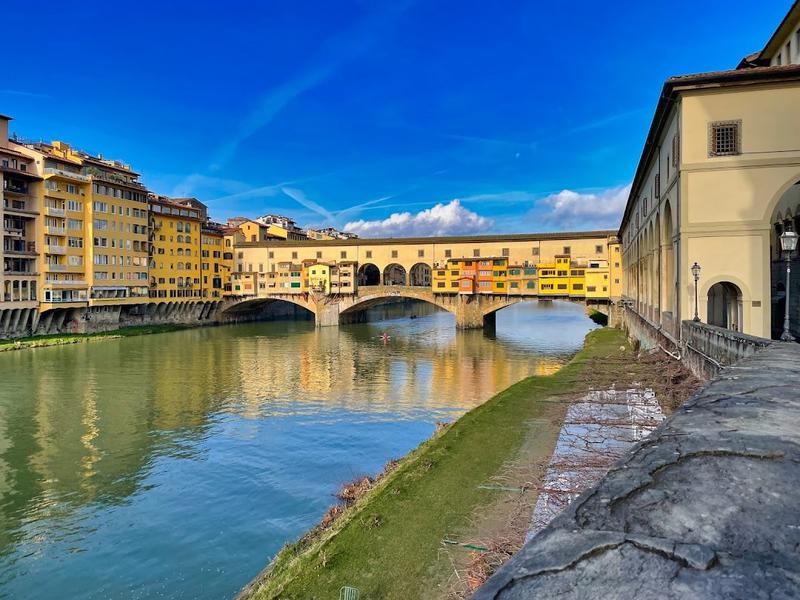
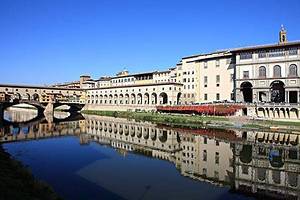
Picturesque medieval arched river bridge with Roman origins, lined with jewelry & souvenir shops.
Day4: Pisa > Siena > San Gimignano > Florence
7 attraction(s) ·
159 km
1
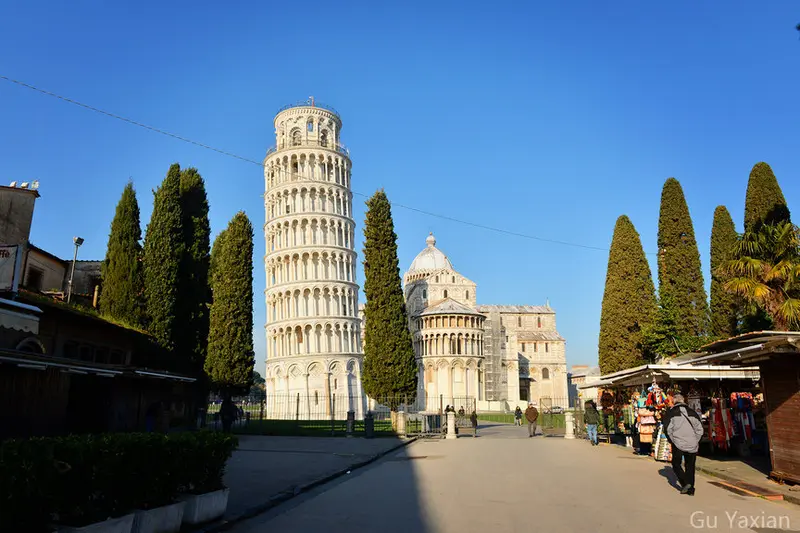
The Leaning Tower of Pisa is a freestanding bell tower located in Miracle Square in the city of Pisa, Tuscany, Italy. It is also one of the world's most famous landmarks and a symbol of Italy. The bell tower was built in 1173 and was initially designed to be built vertically. However, due to the unstable foundation and soft soil, it began to lean towards the southeast during construction and remained in that position upon completion. The tower's leaning position and architectural features make it a unique and beautiful sight.
Legend has it that Galileo conducted a freefall experiment on the Leaning Tower of Pisa in 1590, which disproved Aristotle's theory. In 1987, it and two other buildings were designated as UNESCO World Heritage Sites to recognize their significant influence on Italian architecture. The government has been carrying out maintenance work on the tower to ensure its beauty lasts forever.
The Leaning Tower of Pisa is a building of great historical significance, with its circular design demonstrating its originality and ingenuity. The architect used a circular base design to mirror the adjacent semi-circular apse of the cathedral, creating the unique Pisan style. The tower's decorative style is consistent with the classic designs of the cathedral and baptismal font, with walls made of marble and limestone and raised square pillars, arches, and grid-patterned flat tops. The wall above the arcade presents a strong contrast between bright surfaces and shaded areas, making the internal columns of the tower appear more massive. The cathedral, baptismal font, and bell tower create a visual continuity, creating an atmosphere of ancient architecture.
88
km


4

Art museum with Michelangelo sculptures, including David, plus Renaissance painting & Russian icons.
1
km
5
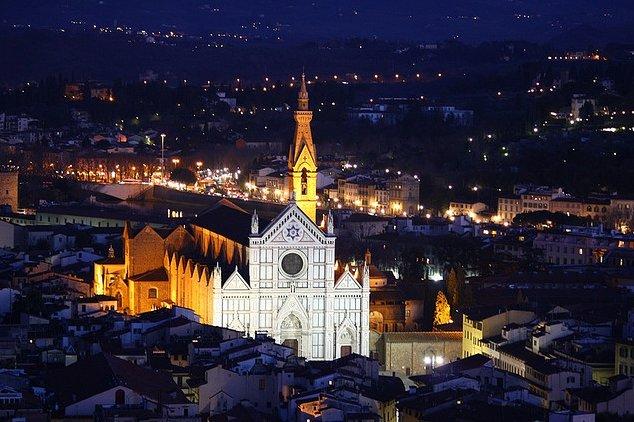
The Basilica of Santa Croce is one of the largest churches of the Franciscan order and a standard secondary cathedral. Its internal structure provided a foundation for later European Catholic churches. Additionally, Santa Croce holds great significance as it is the burial site for many famous individuals from Tuscany and even Italy as a whole, such as Dante, Galileo, Michelangelo, Machiavelli, and Marconi.
2
km

7

19th-century piazza with a bronze replica of Michelangelo's David & panoramic views over the city.
Day5: Ennetbürgen
1 attraction(s) ·
0 km
1

Boat trips take visitors across this fourth-largest lake in Switzerland, with grand mountain views.
Day6: Engelberg
1 attraction(s) ·
0 km
1
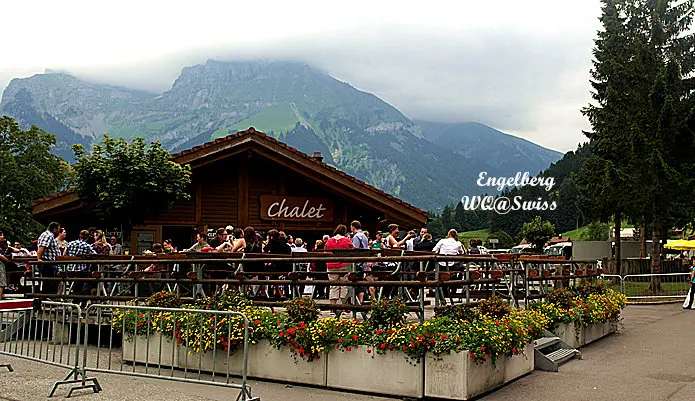
Located in central Switzerland, Mount Titlis reaches an altitude of 3020 meters, making it the highest peak in the region. It offers a diverse range of tourist activities, including glacier crossing by cable car, the Titlis Glacier Park, and glacier walks.
Day7: Paris
6 attraction(s) ·
8 km
1
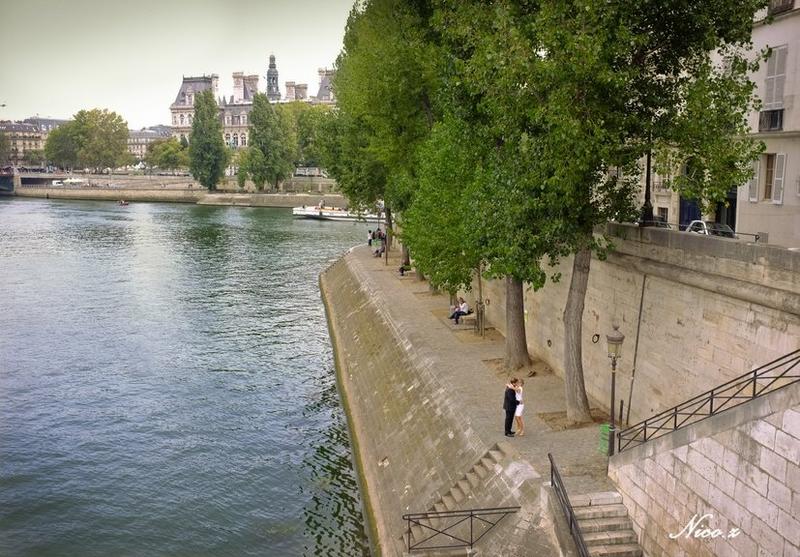
The Seine River is the second longest river in France, with a length of 780 kilometers and a basin area of 78,000 square kilometers. It flows through the center of Paris. In the central section of Paris, the river is constrained by artificial stone embankments, which were listed as a UNESCO World Heritage site in 1991. The French refer to the north bank of the Seine as the right bank, and the south bank as the left bank.
There are several bridges on the Seine River in the center of Paris, among which the most famous is the Alexander III Bridge, named after Tsar Alexander III of Russia who donated it. Many important cultural landmarks in France are scattered along the banks of the Seine, including the Louvre Museum, Les Invalides, the Panthéon, the Orsay Museum, the Palace of Versailles, the Eiffel Tower, and the Arc de Triomphe. The Seine River has also nurtured many world-renowned cultural figures, making it the Mother River of Paris, the City of Culture.
1
km
2
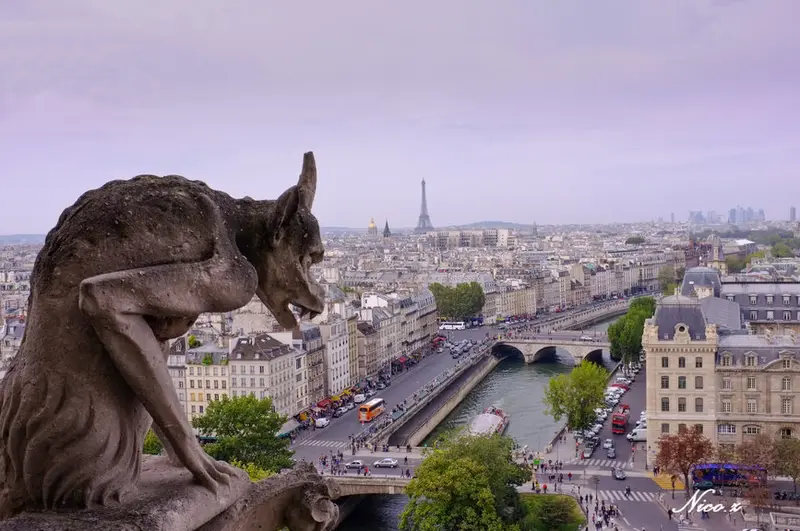
Notre-Dame Cathedral is located on the Île de la Cité in the center of Paris, France. It is a Gothic-style church and the cathedral of the Catholic Archdiocese of Paris. Built between 1163 and 1250, the cathedral has a history of 850 years, witnessing the changes in Paris's history, as well as Napoleon's coronation and the wedding of Napoleon III. The famous novel "The Hunchback of Notre-Dame" by Victor Hugo has also made the cathedral a popular tourist destination. Many people climb to the bell tower to search for the Hunchback, but long queues are common during peak season. In addition, on the first Friday of each month at 3 pm, you can see the exhibition of three relics. Visiting Notre-Dame Cathedral is free, but please respect local religious customs and dress codes, and maintain silence. If you want to visit the bell tower, you can buy tickets on the left side of the church, but be prepared for wait times of over two hours during peak season.
4
km
3
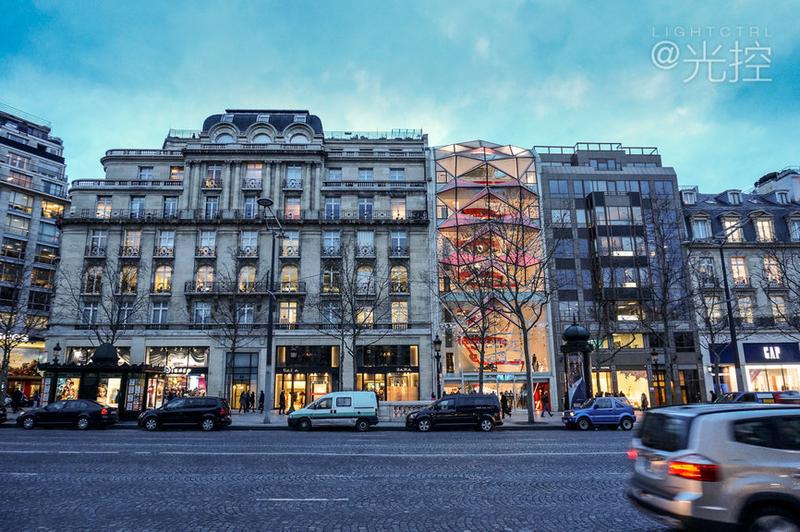
The famous Champs-Élysées is located in the 8th arrondissement of Paris and is known as the most beautiful street in the city. Its name is inspired by the Elysium in Greek mythology, the dwelling place of saints and heroes, symbolizing romance and freedom.
The Champs-Élysées is the central axis of Paris, with the Arc de Triomphe at its western end and the Concorde Square at its eastern end. It is also connected to the Louvre through the Arc de Triomphe du Carrousel. The street is decorated with special lights during major holidays, and important events like the Bastille Day parade and the final stage of the Tour de France are held here.
Nowadays, the Champs-Élysées is often crowded, but there are only a few luxury brands such as Cartier and Mont Blanc on the avenue. The true luxury shopping district is formed by the adjacent Avenue Montaigne, Avenue George V, and Rue François I, known as the Golden Triangle, attracting numerous shoppers. However, during Christmas and New Year, the street becomes particularly lively with the dreamy lights on the trees and the Christmas market, creating a joyful atmosphere for visitors. The street is also vibrant in July, with tropical carnival before the Bastille Day and the final stage of the Tour de France after the national holiday. Sometimes, the French even turn the entire Champs-Élysées into vegetable gardens to educate the public about the sources of food on their tables.
2
km
4
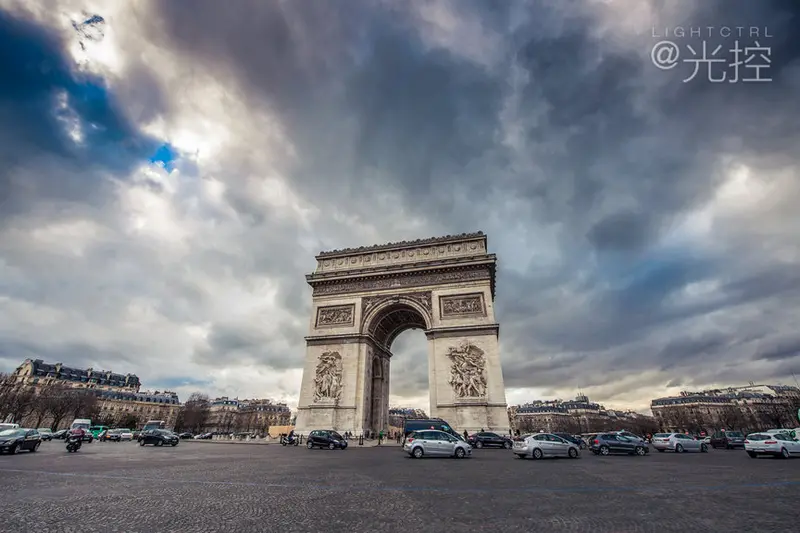
The Arc de Triomphe is located in the center of Place Charles de Gaulle in Paris and is also known as the "Triumphal Arch." The construction of the monument began in 1806 to celebrate a great victory in the Battle of Austerlitz, with Napoleon laying the first stone. Unfortunately, Napoleon did not live to see its completion. Twenty years later, a funeral was held under the Arc de Triomphe to honor him.
Walking from the underground tunnel of the Champs-Élysées to beneath the Arc de Triomphe, visitors can see an unknown soldier's tomb and an eternal flame, which is lit to honor the 1.5 million French soldiers who sacrificed their lives in World War I. On important holidays, a giant French flag is hung at the top of the Arc de Triomphe, accompanied by related commemorative activities. For example, May 8th commemorates Victory in Europe Day from World War II, and November 11th commemorates Armistice Day from World War I.
On July 14th, the national holiday military parade takes place from the Arc de Triomphe to Place de la Concorde. To secure a good spot, visitors need to wake up early and queue in advance. On certain clear mornings, visitors may find some people already waiting quietly beneath the Arc de Triomphe. Additionally, the monument becomes the center of New Year's Eve celebrations, attracting a large crowd, although there are no fireworks in Paris.
The Arc de Triomphe serves as the hub, with twelve major avenues radiating from it. Among them, the most famous one is the Avenue des Champs-Élysées, leading straight from the Louvre to Place de la Concorde. This nearly two-kilometer-long avenue is considered one of the most beautiful streets in the world.
2
km
5
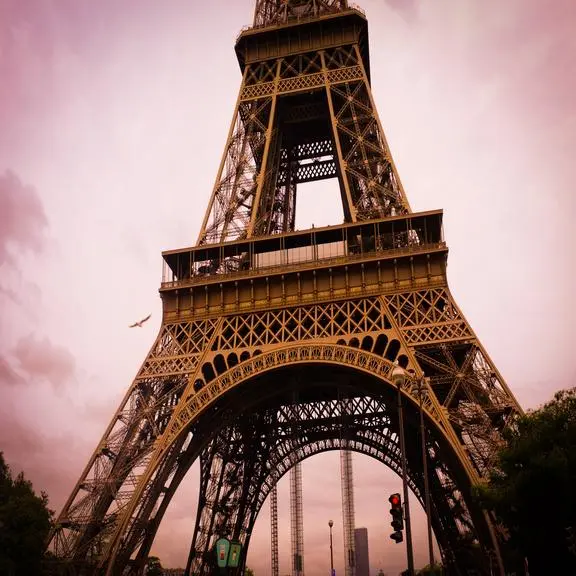
In 1889, the Eiffel Tower was built to commemorate the 100th anniversary of the French Revolution and to welcome the World Expo. This 324-meter-tall giant steel structure was initially controversial as it clashed with the architecture of Paris, and some even called for its demolition. However, today the Eiffel Tower has become a symbol of France and Paris.
Visitors can take the elevator or climb the stairs to reach the top of the tower and enjoy the breathtaking view of the city. On New Year's Eve, the tower sparkles for ten minutes at the top of each hour, and on specific holidays, it displays different colors, such as red for the Chinese New Year and blue for EU Day. During National Day, the Champ de Mars below the tower is an ideal venue for music festivals and New Year celebrations.
There are also two restaurants on the tower: Tour Eiffel 58 and the Michelin-starred restaurant Jules Verne. Tour Eiffel 58 offers lunch and dinner, starting at €19 for lunch and €80 for dinner, but with a higher cover charge. Jules Verne used to be a three-star Michelin restaurant but now has only one star. Lunch starts at €90, and dinner costs around €300 per person. Despite the expensive prices, they are still highly sought after due to their unique location. Therefore, it is advisable to book at least two months in advance during the peak season. If your budget allows, it is recommended to try other three-star Michelin restaurants for a better gastronomic experience.
1
km
6
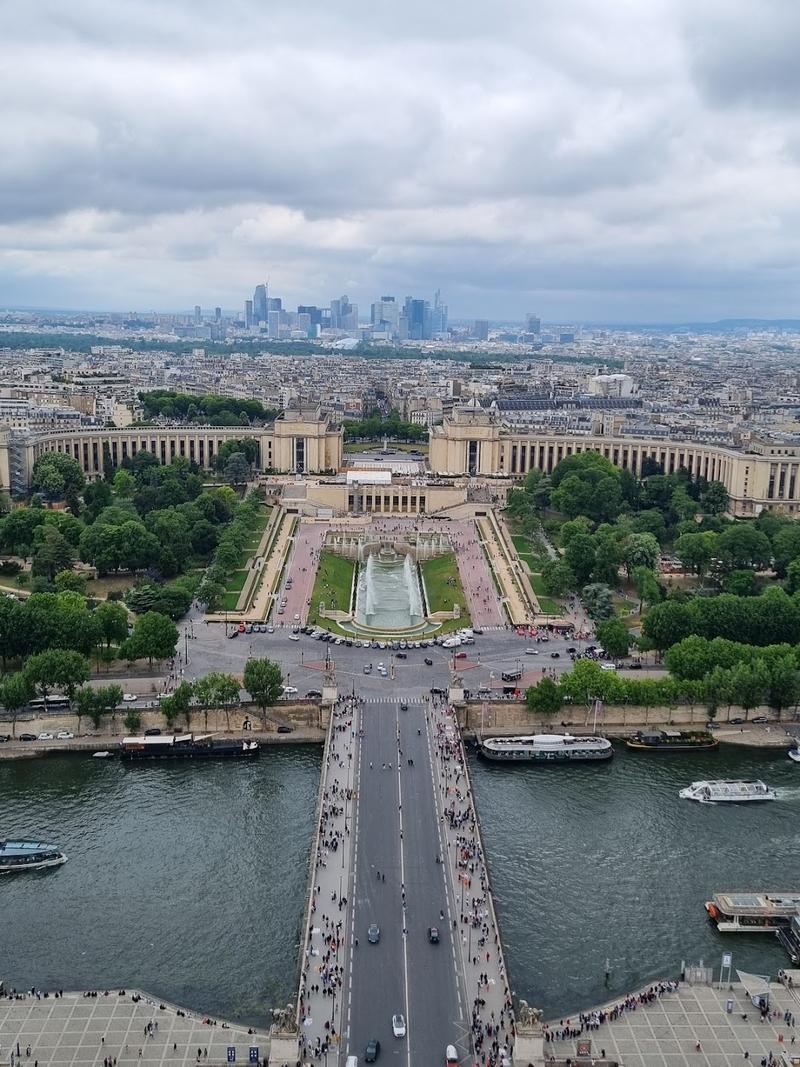
Sprawling, elevated plaza offering striking views of the Eiffel Tower, lush gardens & museums.
Day8: Paris
5 attraction(s) ·
4 km
1

Former historic palace housing huge art collection, from Roman sculptures to da Vinci's "Mona Lisa."
1
km
2
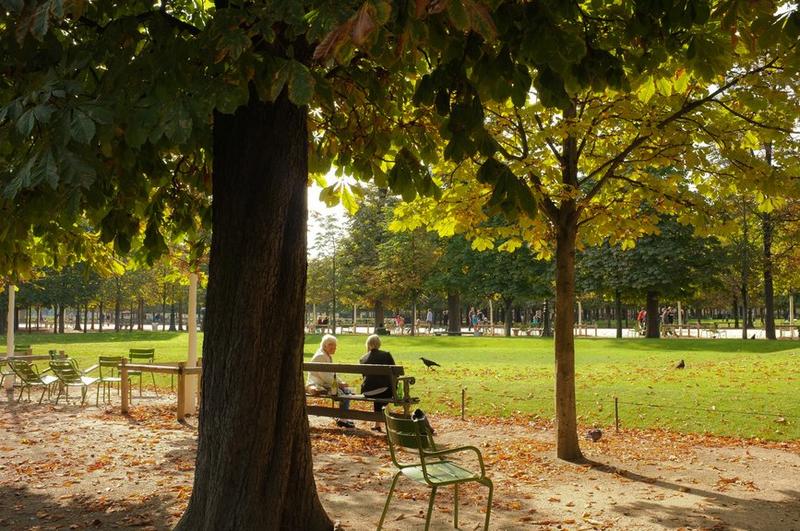
The Tuileries Garden, located between the Louvre and Champs-Élysées, has a unique and advantageous position. Its name derives from the tile factory that once stood here. Through the careful redesign and decoration by designer Le Nôtre, the garden became a typical French garden, although it was initially Italian-style. The Tuileries Palace in the garden was once the royal residence. During the French Revolution in 1880, it was destroyed and leveled, leaving its influence and constraints on the appearance of the park. Today, the Tuileries Garden is part of the Louvre, connecting the left and right wings of the museum, and serves as an open courtyard. It runs parallel to Rue de Rivoli and is adjacent to the National Image Museum of France. The museum got its name from the indoor tennis court added to the northwest corner of the Royal Garden, whose function has now changed. The "Orangerie" museum on the other side of the garden echoes it.
2
km
3
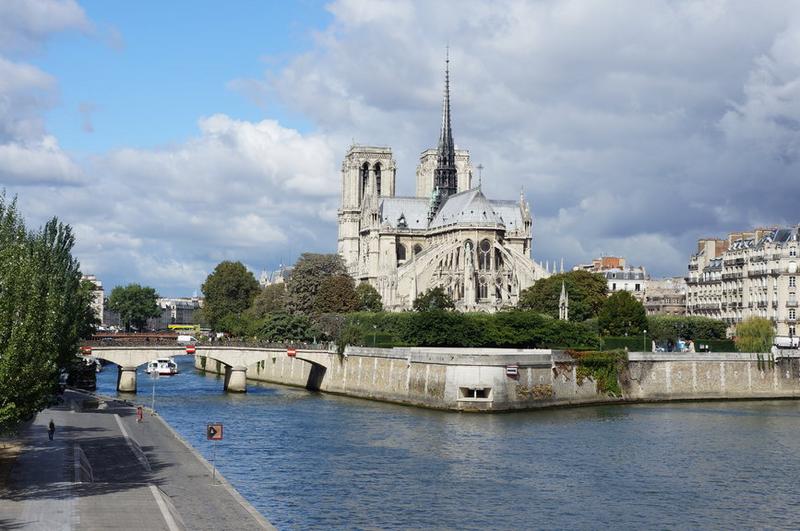
The Île de la Cité is a small island located on the Seine River. It was occupied by a Celtic tribe called the Parisii around 4,200 BC. Today, it is an important area in the heart of Paris. The island is home to many historical landmarks, including the remains of an early palace from the Capetian dynasty. Visitors can explore the famous Sainte Chapelle with its stained glass windows, as well as the Conciergerie, which was converted into a prison after the French Revolution. On the right side of the square is the oldest hospital in Paris, the Hôtel-Dieu. Additionally, you can take a walk on the Pont Neuf, have a picnic or read a book on the riverbank. Despite the expansion of Paris, the Île de la Cité has maintained its significance as the center of royal and ecclesiastical power.
1
km
4
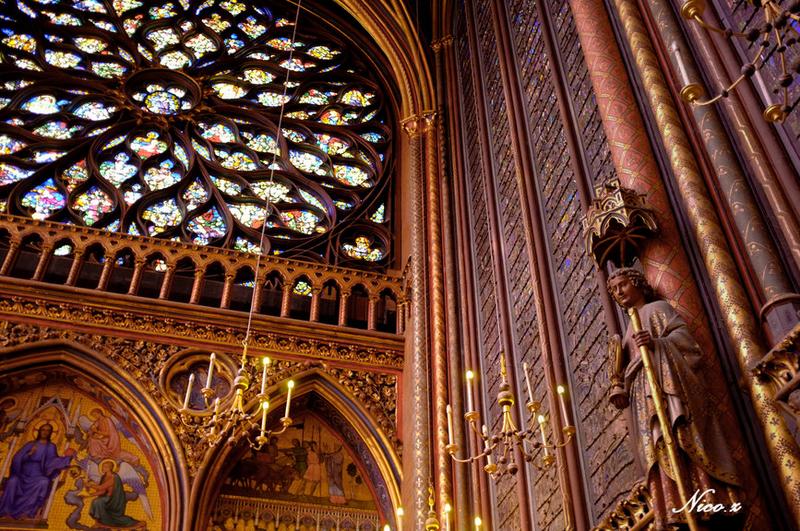
The Sainte-Chapelle is a Gothic church built between 1242 and 1248, ordered by King Louis IX of France. The purpose of its construction was to preserve relics related to the Passion of Jesus, such as the Crown of Thorns and fragments of the True Cross. It is said that the cost of acquiring the Crown of Thorns was even higher than that of building the church. Today, the Sainte-Chapelle is an iconic building in Paris and attracts numerous visitors.
1
km
5
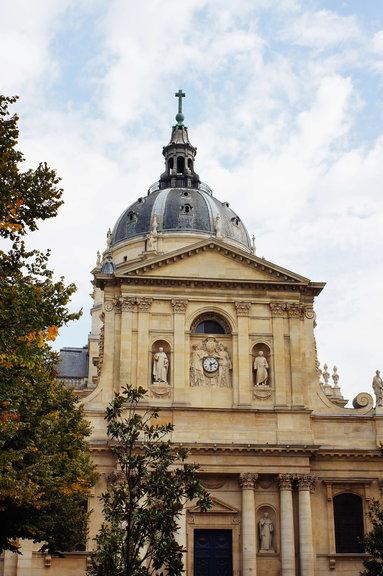
The Latin Quarter is a district located between the fifth and sixth arrondissements of Paris, with two possible origins. According to one account, it was a new city built here by the Romans after their occupation of Paris, called the "Latin Quarter" because the Romans spoke Latin. Another explanation is that during the Middle Ages, France inherited Latin culture, and academic exchanges were conducted in Latin, making it the academic center of Paris and giving the area its name. The Latin Quarter used to be a popular place for students due to its affordable prices and was a gathering place for various higher education institutions, bookshops, shops, and restaurants. Now it is one of the most expensive areas in Paris and also a hub of luxury and fashion, with many famous patisseries. The center of the district is the Sorbonne University, attracting many students and various higher education institutions. There are also some famous attractions nearby, such as the Church of Saint-Germain-des-Prés, the Pantheon, and the Café de Flore.
Day9: Versailles > Giverny > Paris
3 attraction(s) ·
117 km
1
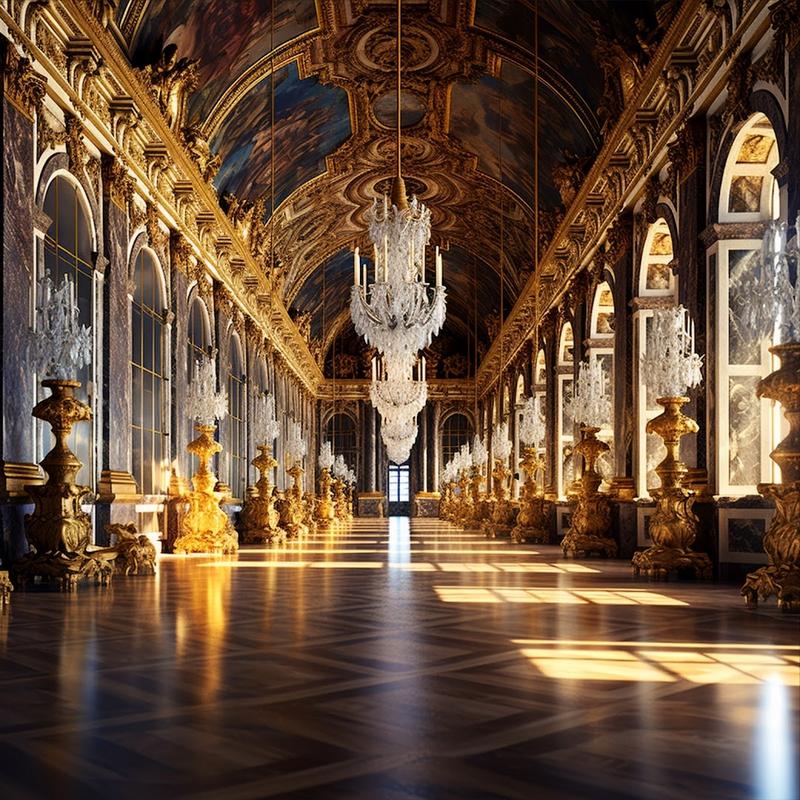
Immense, 18th-century palace with gilded apartments, chandeliered Hall of Mirrors & fountain show.
53
km
2
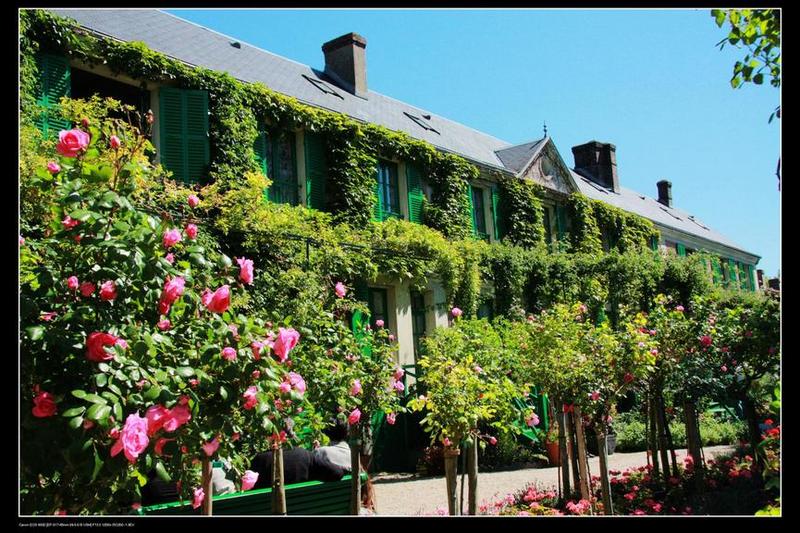
Monet's home is located 88 kilometers northwest of Paris, in Upper Normandy province, where there is a beautiful garden now known as "Monet's Garden." Monet moved here in 1883 and spent much of his life here. He created many iconic works and once said, "My garden is my most beautiful masterpiece." Today, 85 years later, Monet's Garden remains in its original state. In April, tulips bloom; in summer, water lilies are most famous; and before closing in October, chrysanthemums bloom. Whenever you visit, you can find the colors from Monet's paintings here.
65
km
3
The Seine River is the second longest river in France, with a length of 780 kilometers and a basin area of 78,000 square kilometers. It flows through the center of Paris. In the central section of Paris, the river is constrained by artificial stone embankments, which were listed as a UNESCO World Heritage site in 1991. The French refer to the north bank of the Seine as the right bank, and the south bank as the left bank.
There are several bridges on the Seine River in the center of Paris, among which the most famous is the Alexander III Bridge, named after Tsar Alexander III of Russia who donated it. Many important cultural landmarks in France are scattered along the banks of the Seine, including the Louvre Museum, Les Invalides, the Panthéon, the Orsay Museum, the Palace of Versailles, the Eiffel Tower, and the Arc de Triomphe. The Seine River has also nurtured many world-renowned cultural figures, making it the Mother River of Paris, the City of Culture.
Day10: Paris
4 attraction(s) ·
2 km
1
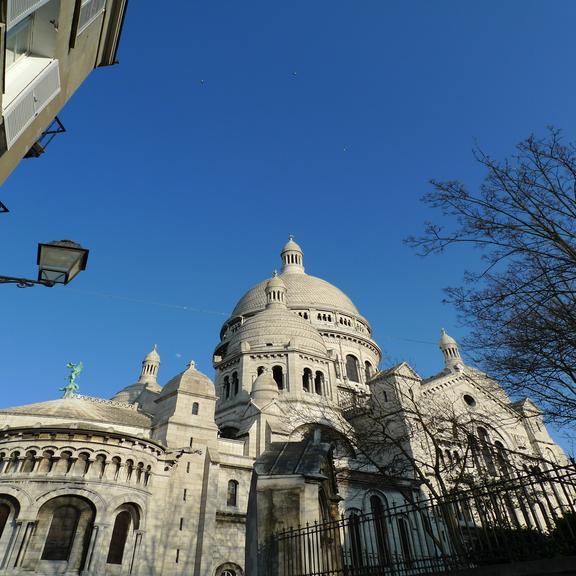
Montmartre is a small village located on a hill about 130 meters high outside the northern city of Paris. It is the geographical high point of Paris and was once a gathering place for impoverished artists. It quickly became the center of drinking and entertainment in Paris due to its location outside the city and its production of wine, giving rise to landmarks such as the Moulin Rouge and the Black Cat. Montmartre attracted many impoverished artists such as Van Gogh, Picasso, Matisse, and Renoir. Today, Montmartre has developed into an upscale residential area with numerous hotels and restaurants. It is also a popular tourist destination due to its portrayal in films like "Amélie". There are various tourist attractions, such as the Basilica of the Sacred Heart and the Place du Tertre. The steps in front of the Basilica offer the best vantage point to admire the entire city of Paris, and there are also cafes and restaurants here. The Place du Tertre is crowded with painters, and you can have your portrait painted by your favorite artist. Couples can also seek out the "I Love You" wall that features the phrase in various languages. Other notable attractions include the Pancake Windmill, the Place du Pigalle, the Cunning Rabbit Bar, the Montmartre Museum, the Montmartre Cemetery, and the Passe-Muraille. In addition, Montmartre exudes a strong artistic atmosphere, with street performers and painters visible everywhere. You can experience the nightlife by visiting the Moulin Rouge and other bars. Whether during the day or at night, Montmartre is worth a visit and is a charming scenic area.
1
km
2

Iconic, domed white church, completed in 1914, with interior mosaics, stained-glass windows & crypt.
2
km
3

Hangout & summer restaurant with Eiffel Tower views on the 8th floor of a major department store.
1
km
4

Elegant department store in an iconic building with 10 domes selling fashion, beauty & luxury items.