Seoul 5-Day Tour: Enjoy History, Culture & Fashion Scenery
2 cities |
11 attraction(s) |
total distance 176
km
 TIPS
TIPS
Day1
Day2
Day3
Day4
Day5
Day1: Seoul
3 attraction(s) ·
2 km
1
Blue House, the presidential office and political center of South Korea, gets its name from its unique blue tiled roof. Located in a beautiful area, Blue House is highly regarded among foreign tourists. To visit Blue House, one must apply in advance on the website and once approved, visitors must follow the staff's instructions. Photography is only allowed in designated areas and visitors are not allowed to bring food or record videos. Additionally, foreign tourists must carry their passports when visiting Blue House.
1
km
2
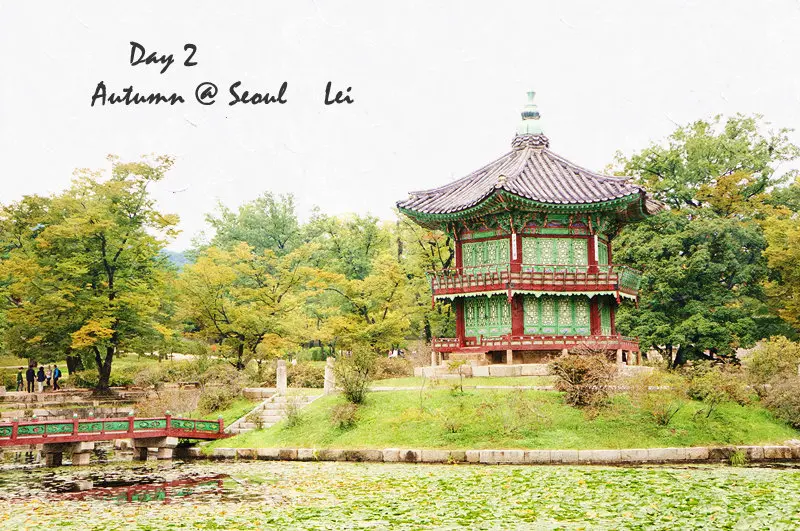
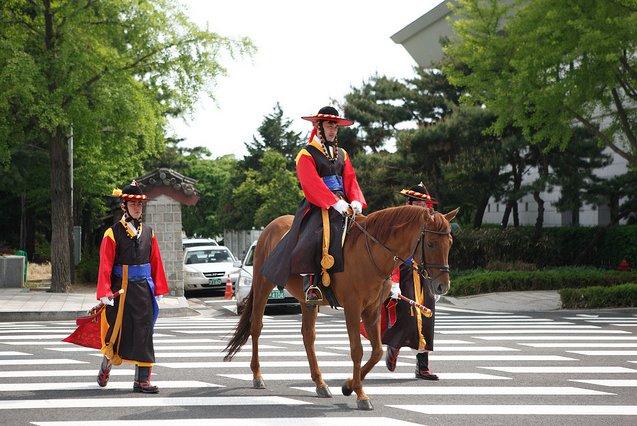
Gyeongbokgung Palace is the first palace built in the early days of the Joseon Dynasty, with a history of 600 years. It was once a grand palace and now showcases delicate beauty. Gyeongbokgung Palace is the largest of the Five Grand Palaces and features unique architecture such as Geunjeongjeon Hall and Gyeonghoeru Pavilion. In addition, there are the National Palace Museum and the National Folk Museum where visitors can explore and experience. Gyeongbokgung Palace is open to the public and there is a ticket office at the entrance of Gwanghwamun. Visitors can also watch the Changing of the Guard ceremony and take photos with the guards, immersing themselves in Korean classical culture.
The name Gyeongbokgung means "great blessings and prospering the nation," reflecting the early aspirations of the Joseon Dynasty. It was completed in 1395 and at its peak had over 390 buildings. During the Japanese invasion in the late 16th century, Gyeongbokgung Palace was burned down and remained abandoned for 273 years. It was restored during the reign of King Gojong but suffered significant damage during the Japanese colonial period, with some buildings demolished and replaced by the Government-General Building. After Korea's independence, Gyeongbokgung Palace gradually underwent restoration, with the completion of the restoration project of Gwanghwamun Gate in 2010. There are also guided tours available in Chinese, departing from the inside of the Geunjeongmun Gate at four designated times.
1
km
3
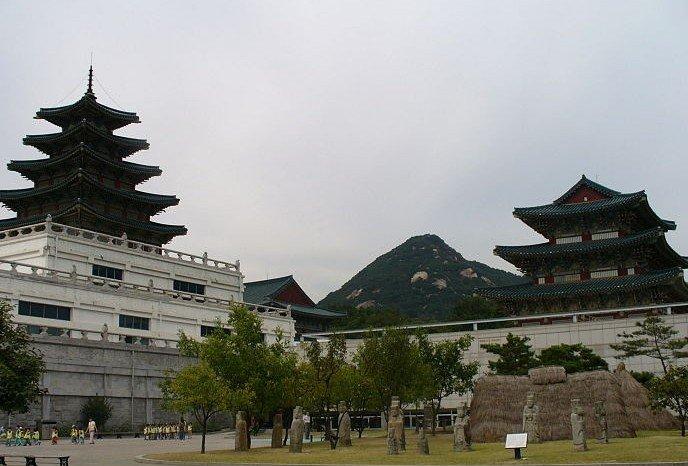
Korean National Folk Museum, established in 1945, was initially located in Namsan, Seoul, showcasing Korean folk history from prehistoric times to 1910. In 1975, the museum was relocated to the grounds of Gyeongbokgung Palace, and the current building was constructed in 1972 in the traditional Korean architectural style. The building was previously used as the National Museum of Korea and underwent renovations in 1986 before reopening in 1993. The museum features three exhibition halls, a children's museum, and an outdoor exhibition area.
Day2: Seoul
2 attraction(s) ·
2 km
1
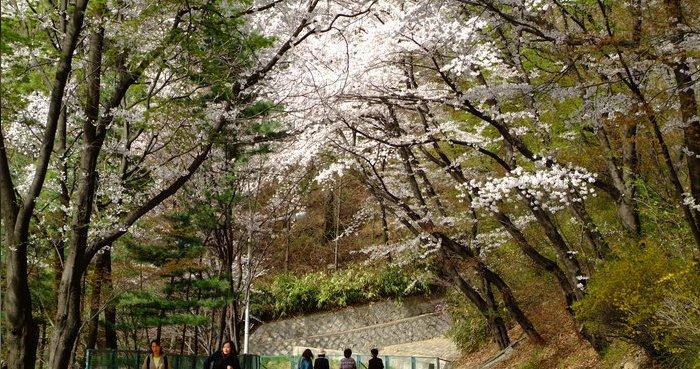
Namsan has an elevation of only 265 meters and is located in the center of Seoul. Despite its low height, it has always been a popular leisure spot for Seoul citizens. From the mountain top, one can enjoy the beautiful scenery of the surrounding area, including various attractions such as an octagonal pavilion, N Seoul Tower, an ocean aquarium, and a fountain. On the halfway up the mountain, there are facilities such as Namsan Library. It is convenient to visit, as one can either take a cable car or walk up the stairs. Namsan, N Seoul Tower, Huigyeongdong, Taegeukdang Road, Jeongdong-gil Street, Jeonunsa Temple, Itaewon, and Hyanwonjeong Pavilion are all accessible by walking up the mountain. In addition, driving around is also a popular way to explore. Namsan Park has always been a place of great historical significance. On top of the mountain, one can still see the well-preserved beacon tower, which represents the original state of Namsan and was the center of the capital's defense. From the 479.7-meter-high N Seoul Tower, one can not only enjoy the beautiful view of Seoul, but also overlook the sea in front of Incheon. The revolving restaurant is particularly special, as one can taste delicious food while enjoying Seoul's night view. In addition, Namsangol Hanok Village, consisting of five traditional Korean houses, is also one of the popular attractions for tourists.
2
km
2
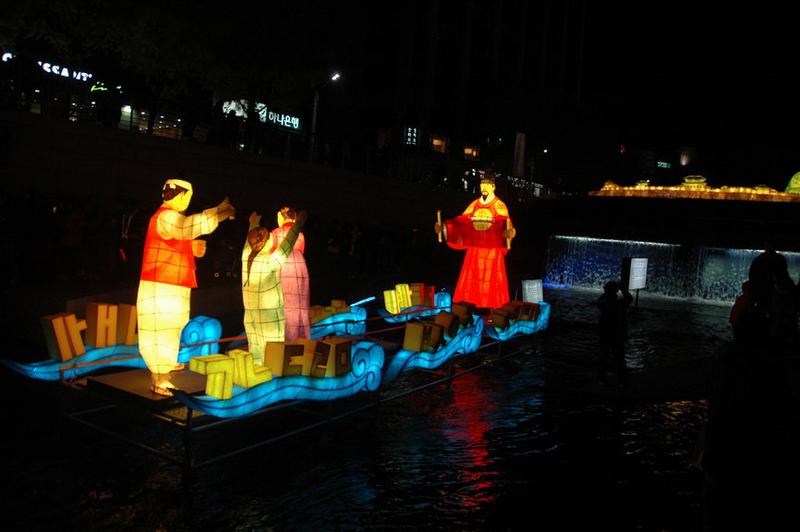
Cheonggyecheon is an artificial river in Seoul, South Korea, with a total length of about 13.7 kilometers. It was excavated in the Joseon Dynasty to solve the problem of rainwater accumulation in the city. Cheonggyecheon used to be used as a sewer, but it was transformed into a famous international tourist attraction in 2005. It is the second largest tributary of the Han River and flows into the Han River after merging with Jungnangcheon, the largest tributary, in the eastern part of the city.
Day3: Gangwon-Do
1 attraction(s) ·
0 km
Day4: Seoul
3 attraction(s) ·
3 km
1
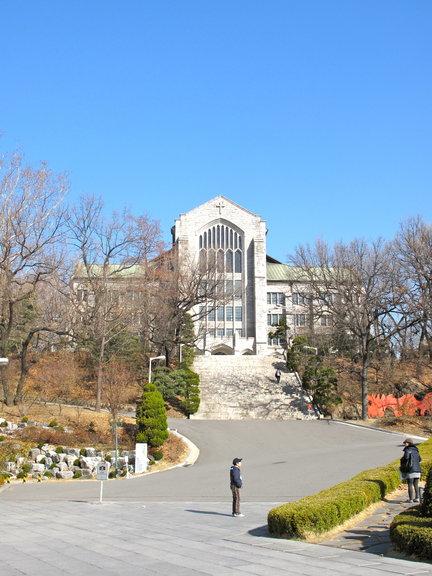
Ewha Womans University is one of the world-famous women's universities, attracting many foreign tourists with its beautiful campus and charming Ewha girls. The scenery here is colorful, with enchanting maple leaves in autumn and blooming cherry blossoms in spring. The entire campus is surrounded by greenery, with ancient teaching buildings coexisting harmoniously with trees, giving people a lively and beautiful feeling. There are many stone school buildings like those in fairy tales, quiet little gardens, campus avenues lined with ginkgo trees, and beautiful and captivating faces, making it hard for people to leave. The whole campus is filled with a faint romantic and aesthetic atmosphere, and a moment's stay here will be refreshing. The school also arranges campus tours led by students, and there are many unique shops and restaurants nearby, making it a great place for a leisurely stroll and to experience campus life.
3
km
2

1
km
3
Day5: Seoul
2 attraction(s) ·
6 km
2
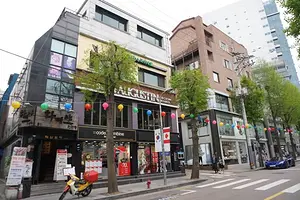
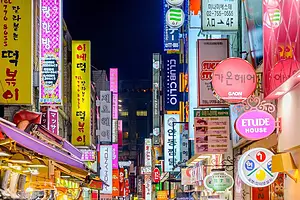
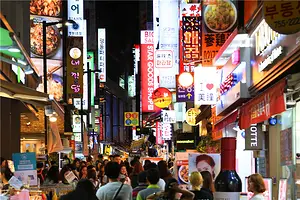
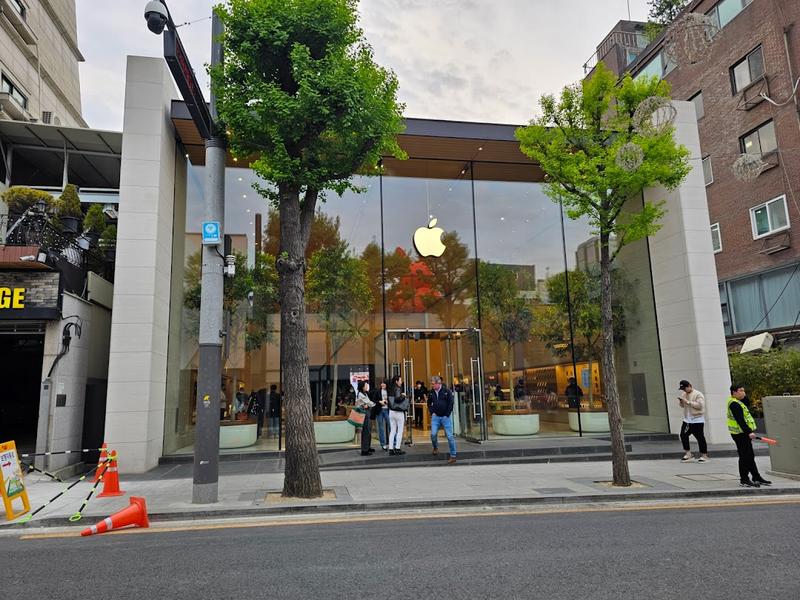
Many high-end international stores & restaurants draw crowds to this bustling retail district.