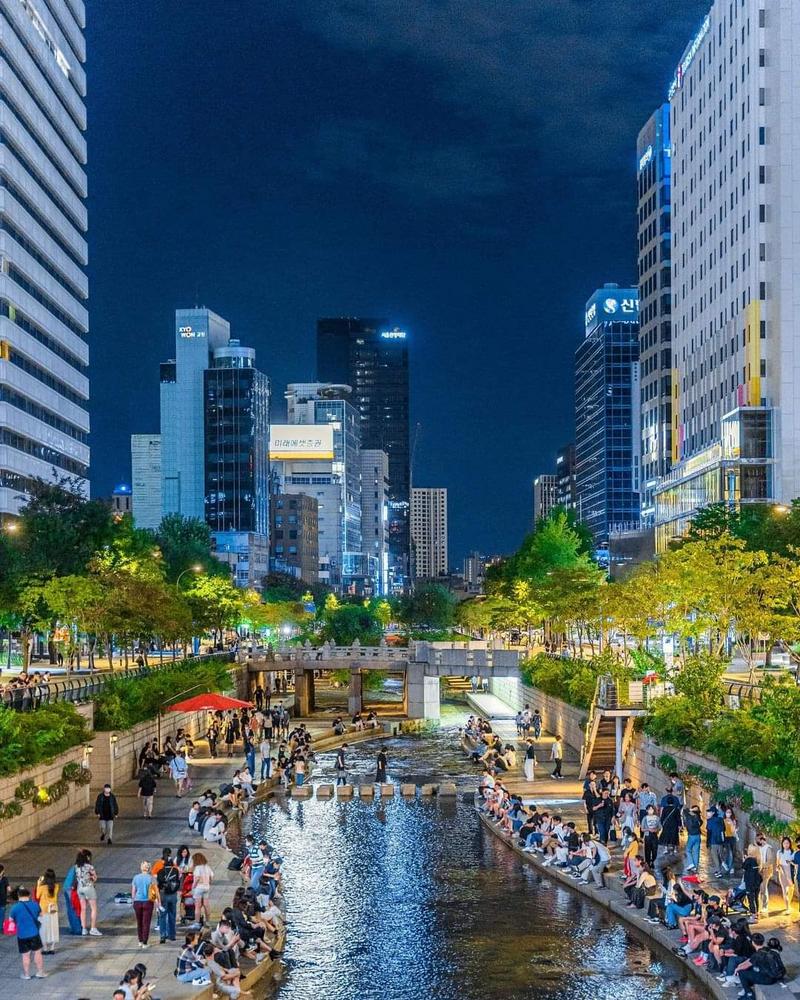
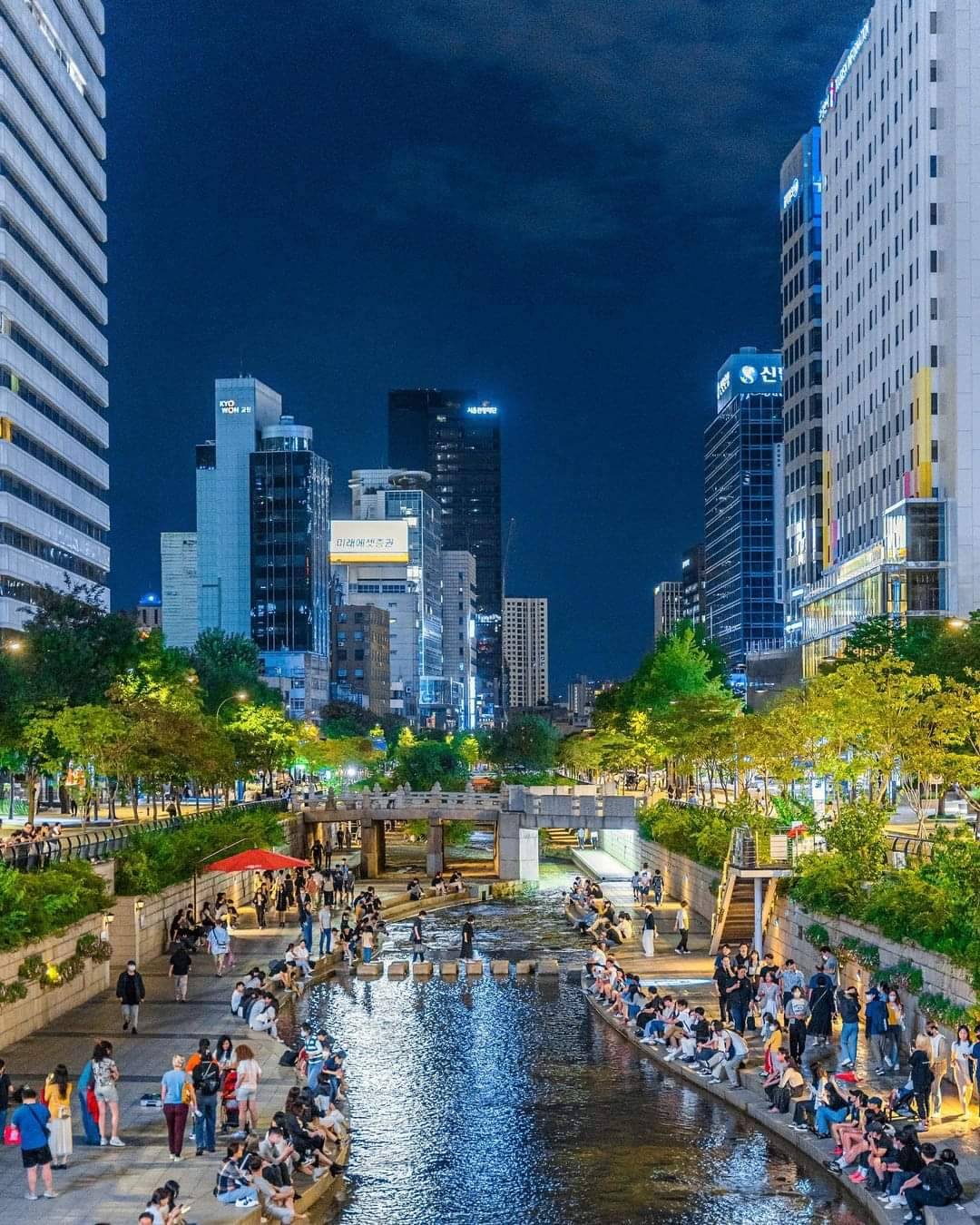
Seoul is the capital of South Korea and its political, economic, and cultural center. The city’s skyline is filled with high-rise buildings interwoven with traditional structures such as palaces and hanok villages, making it the best starting point to experience both modern Korean life and historical culture. Visitors can conveniently reach major attractions by subway and enjoy diverse shopping, cuisine, and nightlife.
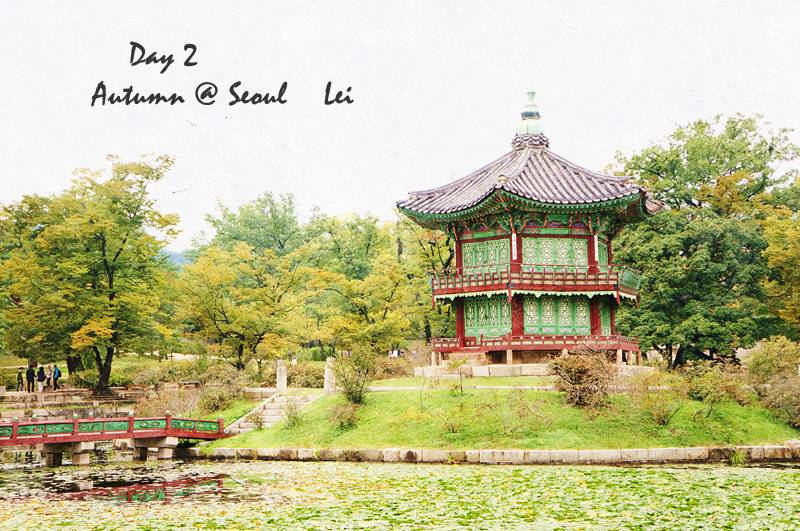
Gyeongbokgung Palace is one of the most important royal palaces of the Joseon Dynasty, built by King Taejo Yi Seong-gye. It is the representative ancient palace of Seoul. The palace buildings are solemn and elegant; visitors can watch the traditional royal guard changing ceremony and also visit the nearby Folk Museum and traditional neighborhoods to learn about the history and court culture of the Joseon Dynasty.
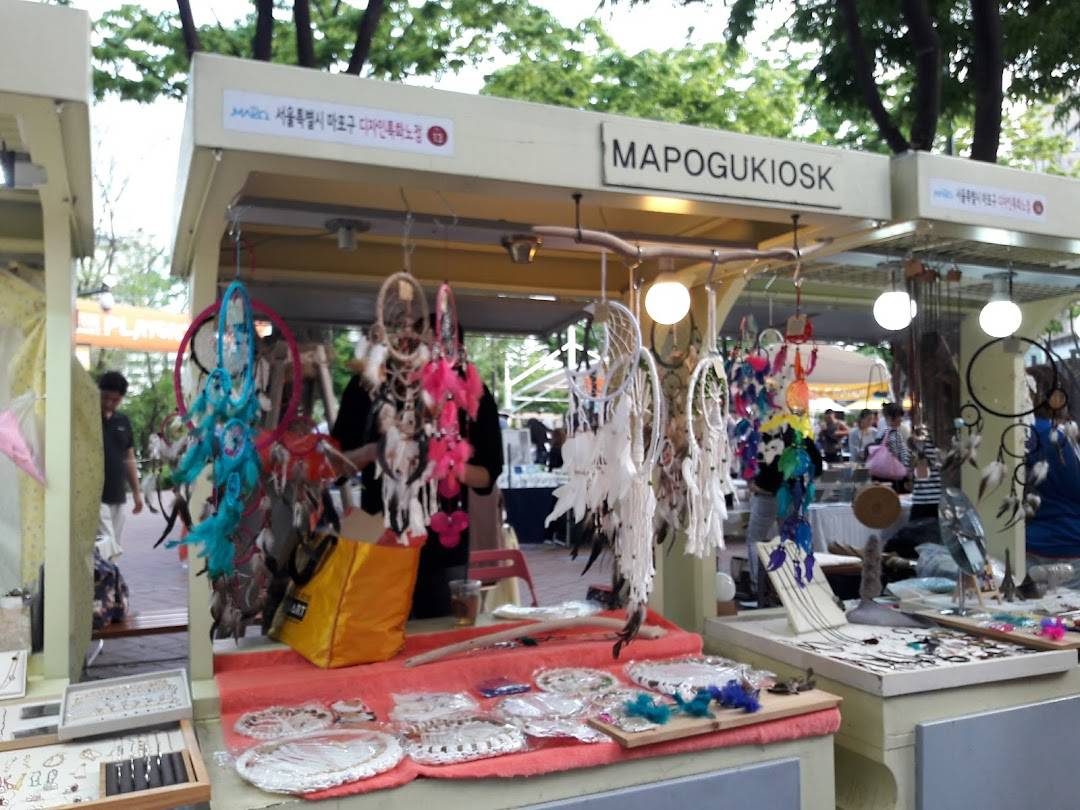
Samcheong-dong is located near Gyeongbokgung Palace and Bukchon Hanok Village and is an old street that preserves a traditional atmosphere. Lined along the street are hanok cafés, galleries, and design shops. It features both antique Korean-style architecture and modern creativity, making it an ideal place for strolling, photography, and experiencing an artsy vibe.
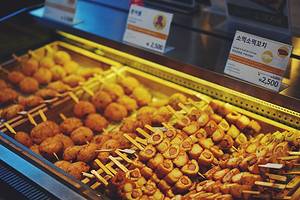
Myeong-dong is one of Seoul’s most famous commercial shopping districts, known for cosmetics shops, fashion boutiques, various chain restaurants, and street food stalls. It is always crowded and brightly lit, and is a popular place for visitors to buy Korean makeup, skincare products, and trendy items.
Dongdaemun is a large shopping and wholesale district in Seoul, with numerous clothing wholesale malls and shopping centers, some of which are open until late at night or even around the clock. It is a hub for clothing wholesale, retail, and fashion trends, very lively at night and ideal for visitors who enjoy mall-hopping and bargain hunting.
The Hongdae area, named after its proximity to Hongik University, is a trendy landmark where young people in Seoul gather. Street performances, independent cafés, second-hand shops, and creative design stores are scattered throughout the area. With abundant music and nightlife in the evening, it is a popular district to experience Seoul’s youth culture and artistic atmosphere.
Itaewon is one of Seoul’s most international neighborhoods, bringing together restaurants, bars, and specialty shops from all over the world. It offers diverse international cuisines, Western-style bars, and various cultural shops, making it a favorite nightlife area for foreign visitors and local young people.
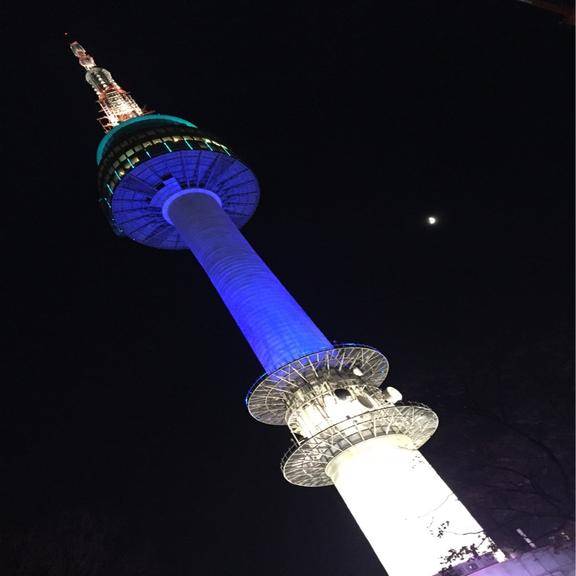
N Seoul Tower is located on Namsan and is one of Seoul’s iconic landmarks. Visitors can take a cable car or hike up Namsan and then go up the tower to enjoy a panoramic view of Seoul. At night the tower is brilliantly illuminated, and the love lock wall at its base is popular with couples, making it a classic must-visit spot in Seoul.
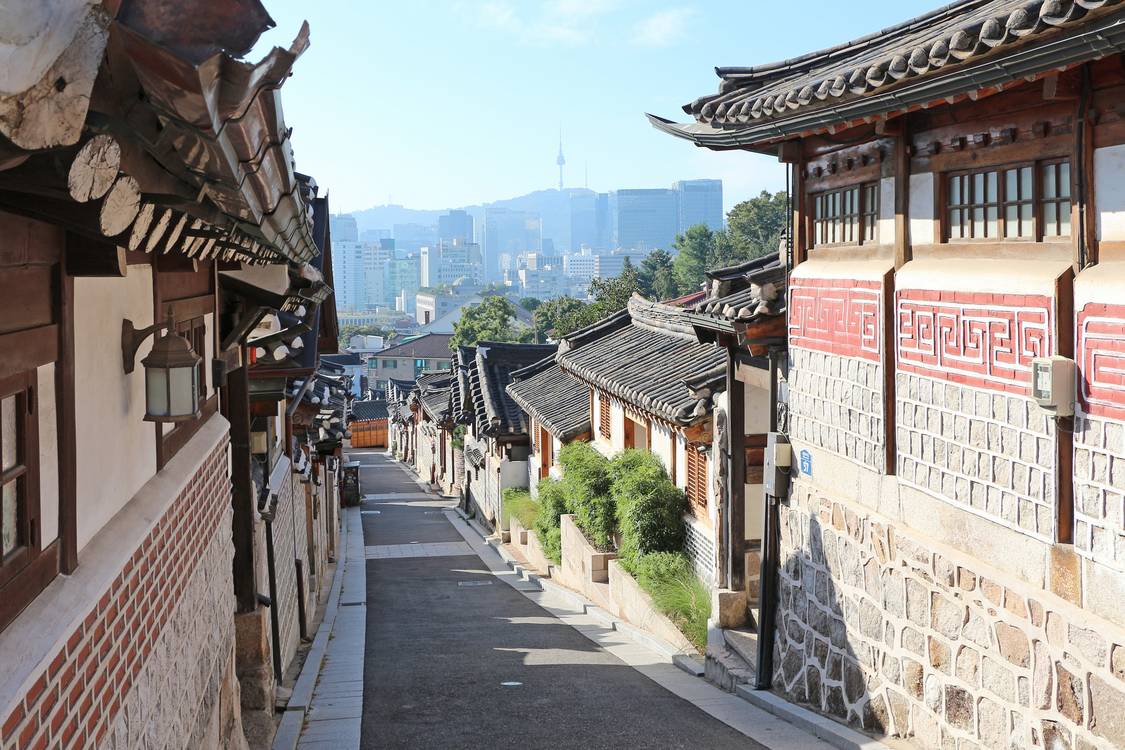
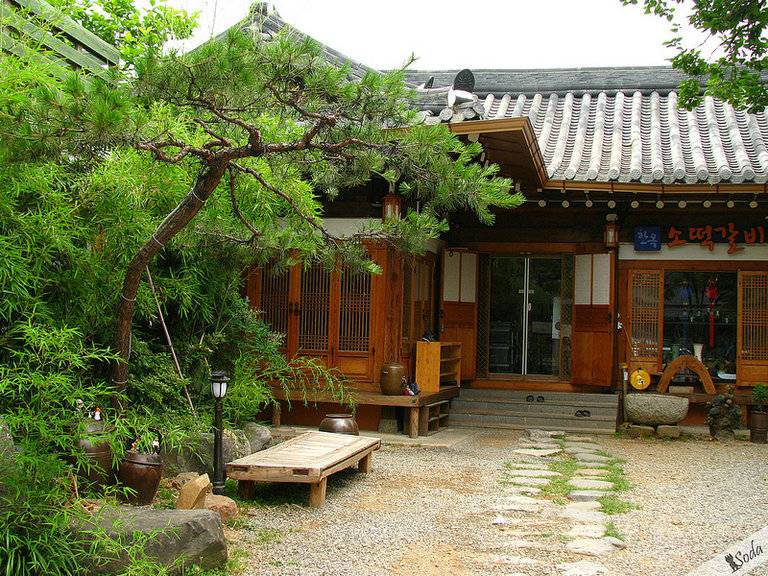
Bukchon Hanok Village is located between Gyeongbokgung and Changdeokgung and preserves a large number of traditional hanok houses. Narrow alleys and antique houses form a unique streetscape. Visitors can wear hanbok to stroll and take photos, experience teahouses and handicraft activities, making it a representative area for understanding traditional Korean residential culture.
Jongmyo Shrine is a royal ancestral shrine that enshrines the spirit tablets of successive kings and queens of the Joseon Dynasty and is listed as a UNESCO World Cultural Heritage site. The Jongmyo Jerye ritual held every May recreates ancient sacrificial ceremonies accompanied by court music and traditional dance, making it an important place to learn about Korean royal etiquette and culture.
Jeju Island is South Korea’s only special self-governing province, famous for its volcanic landscapes, coastlines, and mild climate, and is a renowned resort destination. The island features UNESCO World Natural Heritage sites, haenyeo (female divers) culture, and unique black stone wall villages, making it ideal for self-driving, hiking, and leisurely vacations.
Hallasan is the highest peak in South Korea and the volcanic mountain at the center of Jeju Island, forming part of a World Natural Heritage site. The mountain offers multiple hiking trails: cherry blossoms and azaleas in spring, lush greenery in summer, brilliant maple leaves in autumn, and a silver-white snowy landscape in winter, making it suitable for trekking and nature observation.
Seongsan Ilchulbong (Sunrise Peak) is a tuff cone formed by an underwater volcanic eruption and is famous for its sunrise views. It is listed as a World Natural Heritage site. After reaching the summit, visitors can overlook the coastline and surrounding islets, making it a classic spot to photograph the sunrise and experience Jeju’s volcanic terrain.
Udo is an offshore islet located to the east of Jeju Island, known for its clear waters and pastoral scenery. The island is ideal for cycling around, strolling along the beaches, experiencing traditional haenyeo culture, and tasting seafood dishes and peanut ice cream, making it a slow-paced vacation island.
The Jusangjeolli Cliff is located along the coast of Jeju and consists of dense hexagonal basalt columns formed when volcanic lava cooled and contracted. The neatly arranged black columns and crashing waves create a spectacular scene, making it one of the representative spots to view Jeju’s volcanic coastal landforms.
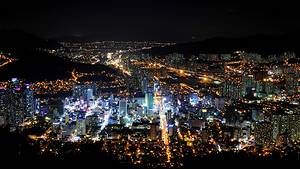
Busan is South Korea’s second-largest city and an important port, known for its coastal scenery, seafood cuisine, and film culture. The city offers multiple beaches, scenic bridges, and markets, making it a popular destination that combines seaside vacations with urban sightseeing.
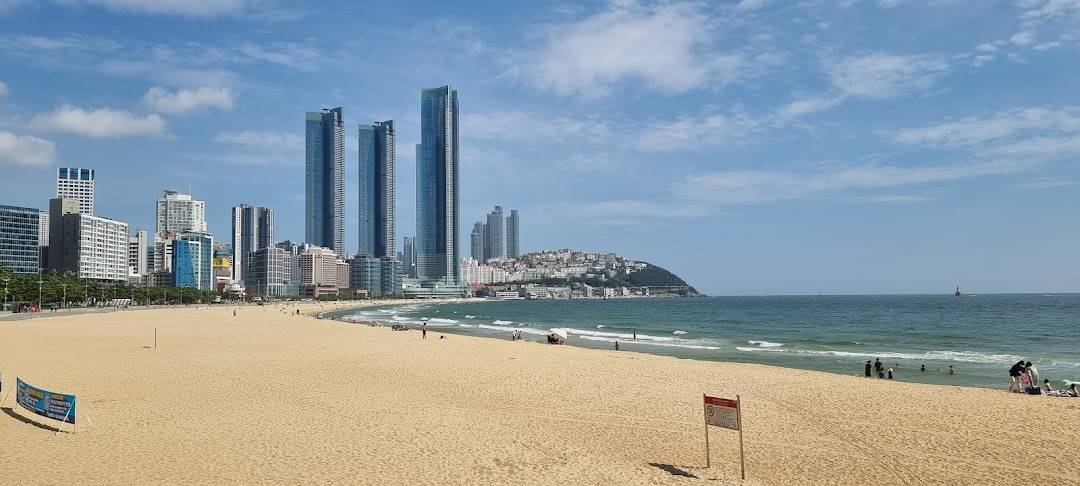
Haeundae Beach is one of the most famous beaches in South Korea, with fine sand that attracts large numbers of visitors in summer for swimming and sunbathing. The area is lined with high-rise hotels, and there are many restaurants, cafés, and seafood eateries, making it Busan’s representative resort beach.
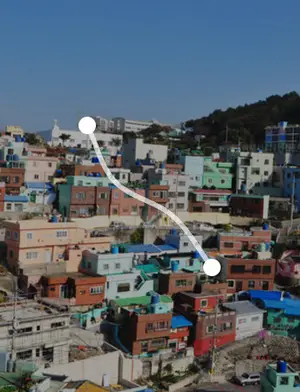
Gamcheon Culture Village is located on a hillside and is composed of colorful houses and alleys, often called the “Santorini of Busan.” The village is filled with murals, art installations, and viewing platforms. Climbing higher offers views over the port, making it a popular spot for photography and experiencing community art.
Jagalchi Market is one of Asia’s well-known large seafood markets, close to the port and offering an abundance of marine products. Visitors can select fresh seafood in the market and have it prepared on the spot as sashimi or grilled dishes, experiencing authentic Busan fishing port food culture.
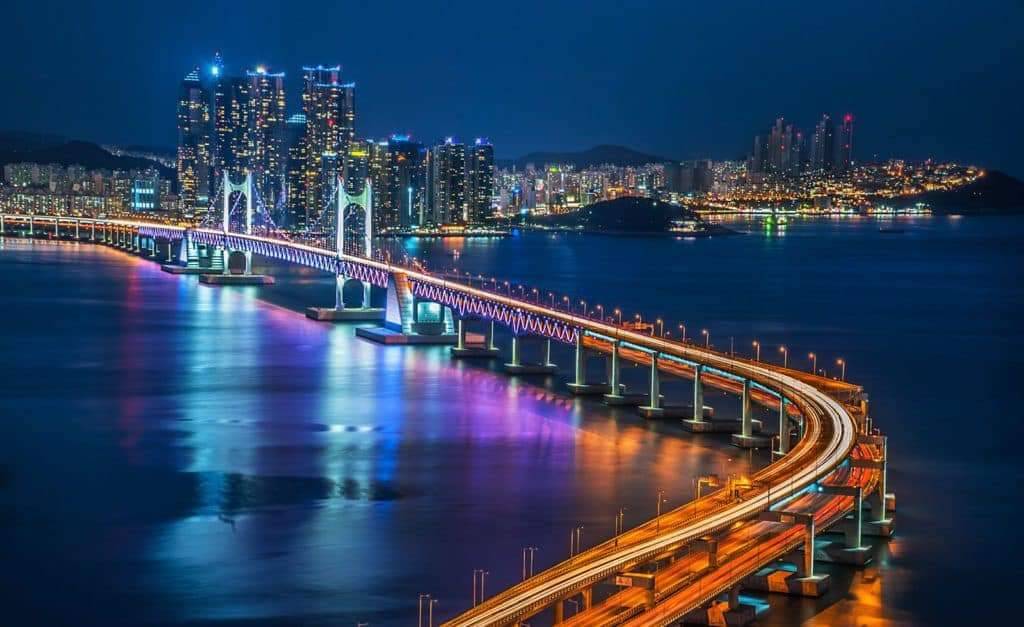
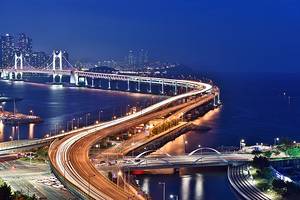
Gwangandaegyo Bridge spans Busan Bay and is an iconic cross-sea bridge of the city. At night, the bridge is lit with changing colors, creating a beautiful scene together with Gwangalli Beach. It is suitable for walking, cycling, and night photography, showcasing Busan’s romantic seaside charm.
Jeonju Hanok Village gathers hundreds of traditional hanok houses and is one of the most representative hanok settlements in South Korea. Visitors can wear hanbok, experience Korean tea ceremonies and traditional crafts, and taste local delicacies such as Jeonju bibimbap, making it an important place to experience traditional Korean life and food culture.
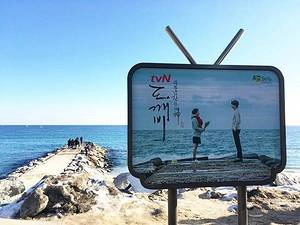
Gangneung is located on South Korea’s east coast and is known for its seaside scenery and coffee culture. The city has a famous coffee street, Gyeongpo Beach, and filming locations for the K-drama “Goblin.” In winter, nearby mountains offer skiing, making it a city that combines sea views with a relaxed atmosphere.
Gyeongpo Beach is Gangneung’s representative beach attraction, with a wide and fine sandy shore backed by Gyeongpo Lake. It is suitable for water activities and seaside walks in summer. With many cafés and viewpoints nearby, it is a popular place on the east coast to watch the sunrise and feel the sea breeze.
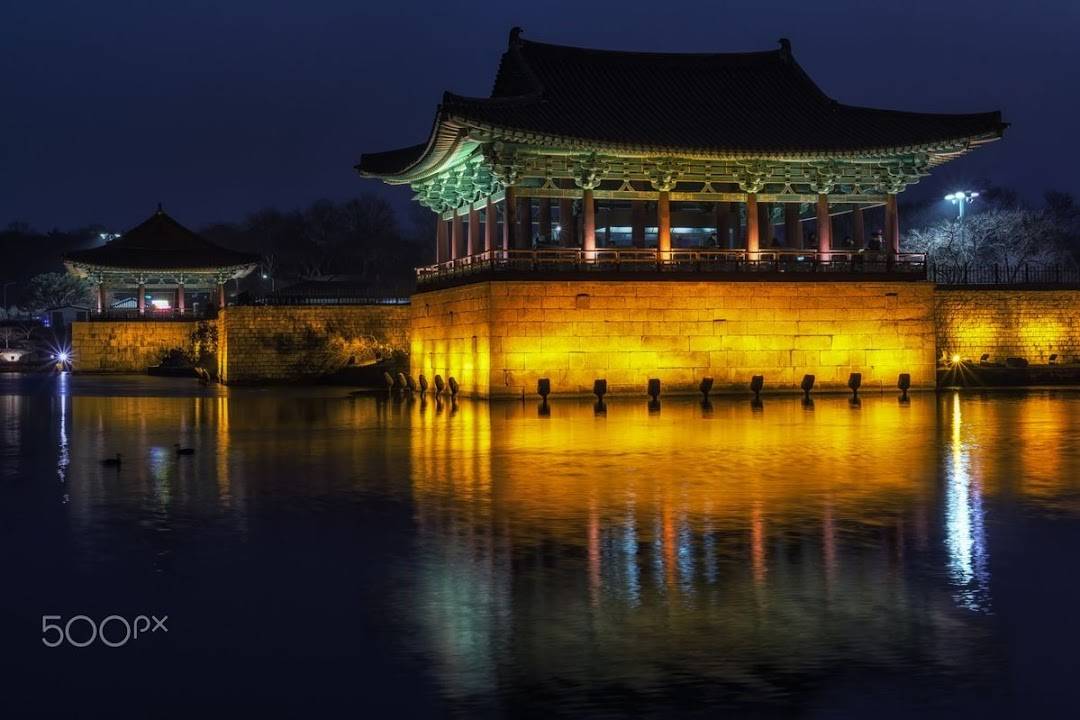
Gyeongju, the ancient capital of the Silla Dynasty, is known as a “museum without walls.” The city is filled with ancient tombs, Buddhist temples, and grottoes. With its tranquil and quaint atmosphere, it is a must-visit destination for enthusiasts of Korean history and culture.
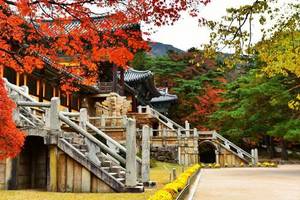
Bulguksa Temple is an important Buddhist temple established during the Silla period and is listed as a World Cultural Heritage site for its architectural and stone pagoda artistry. Many of its stone pagodas and pavilions are well preserved, making it a representative site for the study of ancient Buddhist architecture and art.
Seokguram Grotto is an artificial stone grotto shrine located on Mount Toham and, together with Bulguksa, is a World Cultural Heritage site. The seated Buddha statue of Shakyamuni and the surrounding stone carvings inside the grotto are exquisitely crafted, making it one of the representative works of East Asian Buddhist art.
Nami Island is a small island in the middle of a lake near Chuncheon, made famous as a filming location for the K-drama “Winter Sonata.” The roads on the island are lined with ginkgo and pine trees. Cherry blossoms in spring and golden ginkgo leaves in autumn are particularly enchanting, making it suitable for cycling, strolling, and family trips.