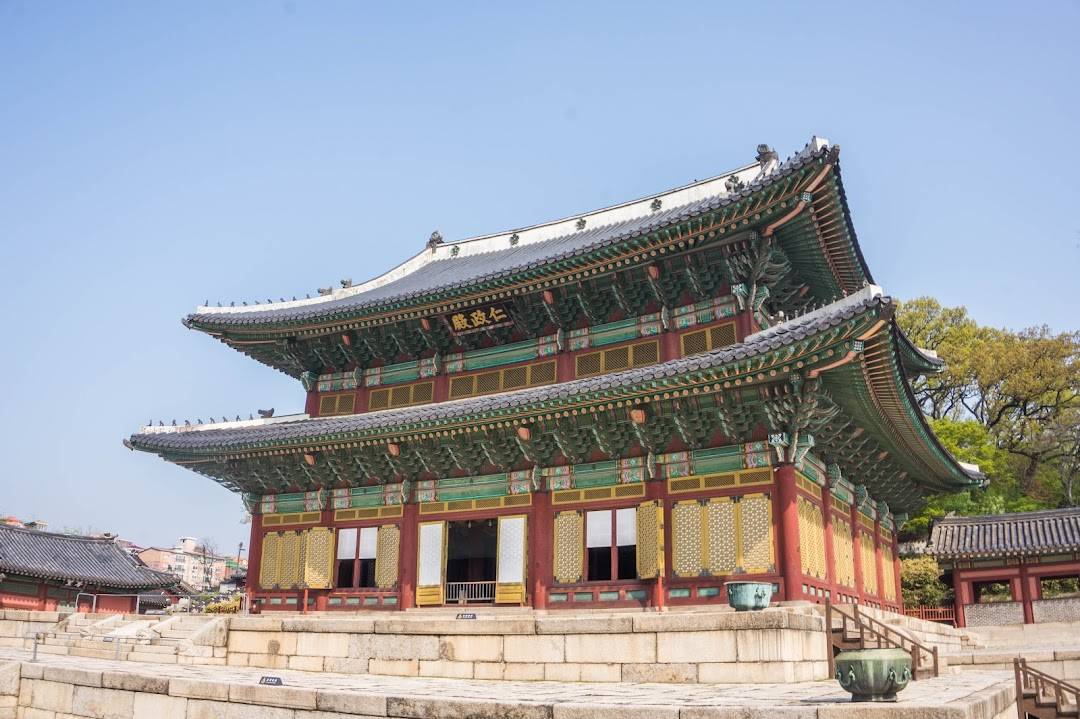
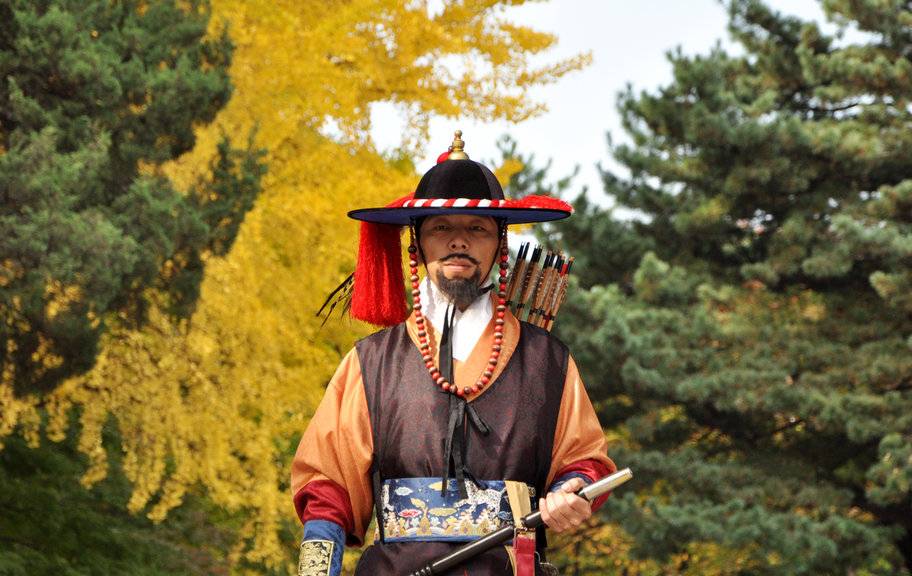
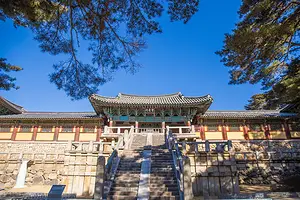
Gyeongbokgung Palace is one of the largest and oldest palaces in Seoul and served as the main palace of the Joseon Dynasty. Important buildings such as Geunjeongjeon Hall and Gyeonghoeru Pavilion are preserved within the palace, and a royal guard changing ceremony is held daily. Soldiers dressed in traditional uniforms perform a solemn reenactment accompanied by drums and music. It is a representative spot for understanding the court etiquette and palace layout of the Joseon Dynasty.
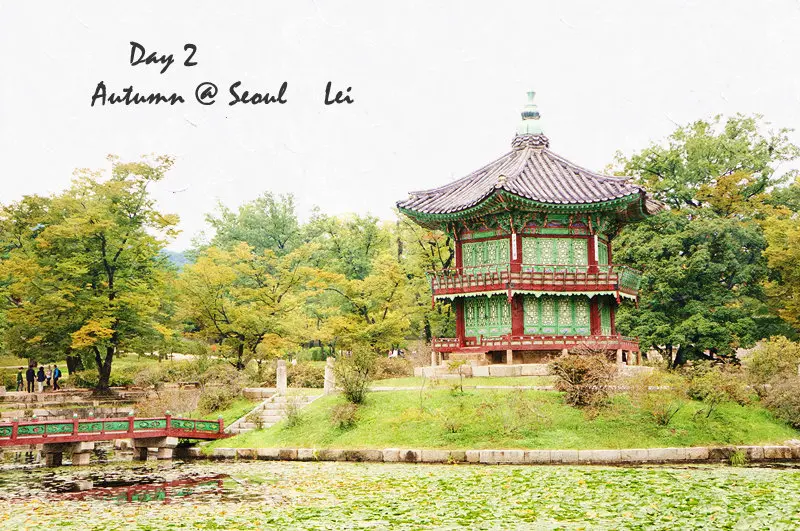
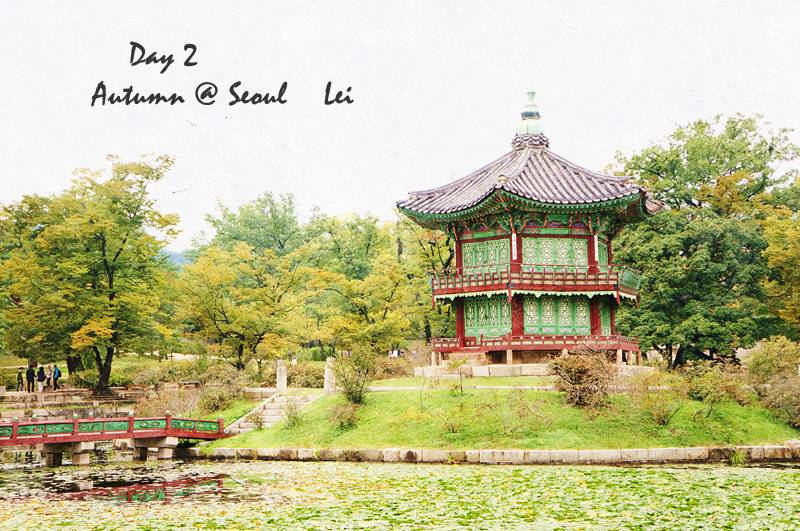
Gyeonghoeru Pavilion is located within Gyeongbokgung Palace and was built over an artificial lake. It was an important venue during the Joseon Dynasty for hosting royal banquets and receiving foreign envoys. The structure is famous for its high stone platform and wooden pavilion, and its reflection in the pond creates a very beautiful scene. It is a popular spot for photographing palace waterscapes and traditional architecture.
Geunjeongjeon Hall is the main hall of Gyeongbokgung Palace and the place where the king’s enthronement ceremonies and important state assemblies were held. Inside the hall are the royal throne and exquisite dragon-pattern decorations. The roof and bracket carvings are finely crafted, fully reflecting the dignity and splendor of Joseon court architecture. It is an important building for studying Korea’s ancient political rituals and court system.
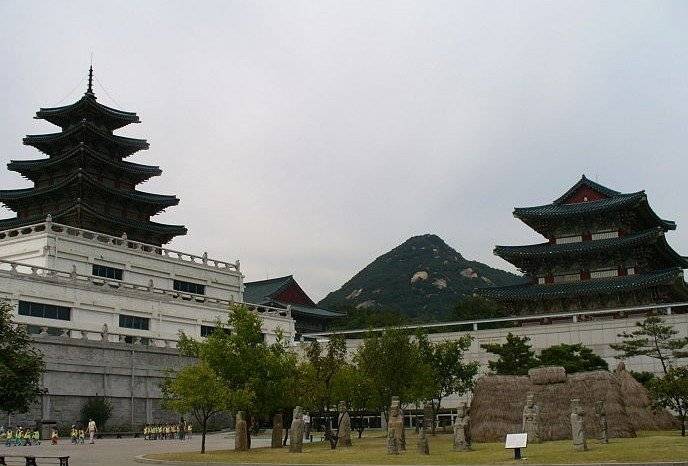
The National Folk Museum of Korea is located on one side of Gyeongbokgung Palace and houses about 98,000 artifacts. Through objects, models, and multimedia exhibition systems, it introduces the daily life, etiquette and customs, and traditional crafts of the Korean people across different eras. It is a centralized place to learn about Korean folk culture, clothing and food, and seasonal festivals, and is well-suited to visit together with Gyeongbokgung Palace.
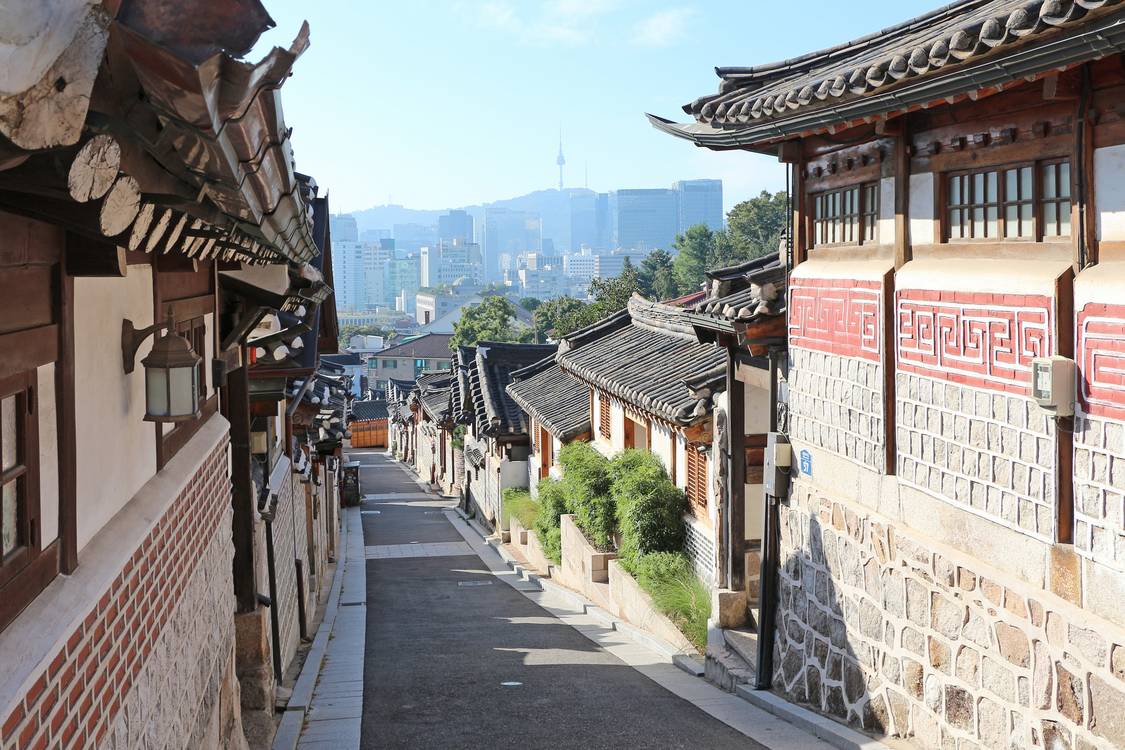
Bukchon Hanok Village lies between Gyeongbokgung and Changdeokgung palaces and preserves hundreds of traditional hanok houses from the Joseon Dynasty. It is a rare large-scale traditional residential area in central Seoul. The winding stone-paved roads, slopes, and alleys lined with wooden hanok and tiled roofs form a unique landscape. Following the “Bukchon Eight Views” walking route, you can overlook the Seoul city skyline and experience Korean-style teas and desserts in traditional teahouses.
Gahoe-dong is a famous area within Bukchon Hanok Village, gathering well-preserved traditional hanok and distinctive viewpoints. Here you can photograph scenes where hanok rooftops coexist with modern high-rise buildings in Seoul. It is a popular photography spot for feeling the intertwined landscapes of tradition and modern city life, and it is also dotted with galleries, cafés, and small cultural spaces.
Changdeokgung Palace is one of the main palaces of the Joseon Dynasty and is famous for its layout that harmonizes with the natural terrain. Together with its rear garden, it is inscribed as a UNESCO World Cultural Heritage site. The palace buildings are distributed along the slopes and contours of the land, and the courtyards are layered and rich, reflecting a garden design philosophy that follows nature. It served as the main palace during multiple periods.
The rear garden of Changdeokgung Palace, also known as the Secret Garden, was the royal garden of the Joseon Dynasty and was used exclusively for the royal family’s rest and banquets. The garden is equipped with ponds, pavilions, stone bridges, and paths winding around forested hills. Its scenery changes with the seasons: cherry blossoms and fresh greenery in spring and especially brilliant maple leaves in autumn. The garden can be visited only by reserved guided tours, which explain the garden layout, historical anecdotes, and royal life. It is a representative place to experience the aesthetics of traditional Korean gardens.
Tosokchon Samgyetang is a well-known traditional restaurant near Gyeongbokgung Palace, famous for its ginseng chicken soup (samgyetang). A whole tender chicken stuffed with glutinous rice is simmered for a long time with ingredients such as Korean ginseng and jujubes, creating a rich broth that locals often regard as a nourishing dish. The restaurant retains a hanok-style interior, and the meal is served with kimchi and rice, making it a very popular energizing lunch option when touring the palace area.
Deoksugung Palace, located near Seoul City Hall, is one of the important palaces from the late Joseon Dynasty. Inside the palace grounds stand both traditional Korean palace buildings and Western-style stone buildings, such as Seokjojeon Hall, showcasing the transitional appearance of the modern historical period. The palace is not large but has a compact layout, making it suitable for an evening stroll to feel the unique scenery of an ancient palace standing side by side with modern municipal buildings.
Seokjojeon Hall is a Western-style palace building within Deoksugung, designed and constructed by Western architects in a Neoclassical stone style. It once served as a residence and reception space for the royal family. Parts of the interior now function as exhibition and museum spaces. Its Western colonnade stands in sharp contrast with the surrounding traditional palace buildings, reflecting historical traces of Western influence in the late Joseon period.
Deoksugung Stone-wall Road encircles the palace walls of Deoksugung Palace and is one of Seoul’s famous walking routes. On one side of the narrow road is the ancient stone wall, and on the other side is the city streetscape. Especially around sunset, golden light falls on the stone walls and plane trees, creating a romantic atmosphere. It is often regarded as a popular spot for couples’ dates and photography.
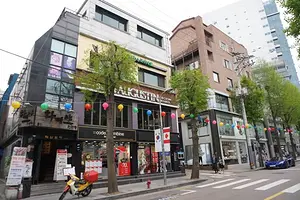
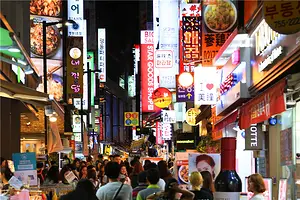
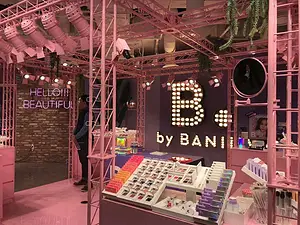
Myeongdong is one of Seoul’s busiest shopping and food districts, packed with various cosmetics shops, fashion stores, and street food stalls. It is most lively in the evening and at night, where you can try creative snacks such as grilled bread burgers, as well as Korean street foods like fish cakes and tteokbokki (spicy rice cakes). It is a representative area for experiencing the vibrant urban energy and shopping fun of Seoul.
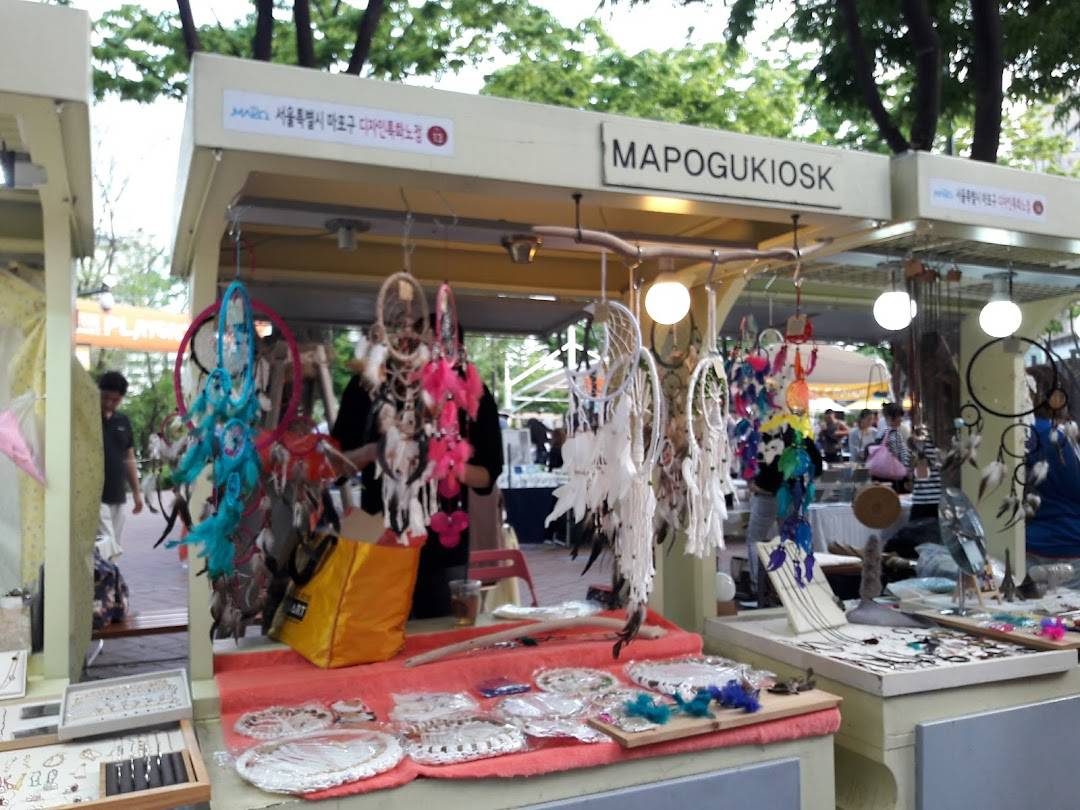
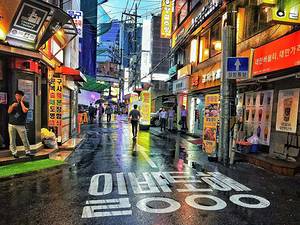
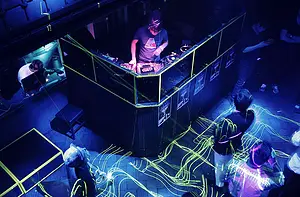
Hongdae refers to the area around Hongik University and is a favorite arts and nightlife district for young people in Seoul. The streets are full of graffiti, indie music performances, markets, and a variety of unique cafés and bars. The night market offers many street food stalls, including sweet treats like candied fruit skewers. The lively and free atmosphere makes it an ideal place to relax and experience Seoul’s nightlife after a day of palace visits.